


Electric Motorcycle Trends: What's Changing in 2026
The idea that electric motorcycles are a few years behind ICE bikes in real-world capability is quickly becoming outdated. In 2026, solid-state batteries are moving from lab prototypes to actual production bikes, connectivity features that used to be reserved for luxury cars are now standard on entry-level models, and the aftermarket is exploding with performance upgrades that actually matter. Whether you’re hunting for a new ride or planning your next mod project, understanding what’s genuinely changed this year gives you a real edge on the street, trail, or track.
Table of Contents
- Solid-state batteries: The 2026 breakthrough
- Smarter bikes: Connectivity, OTA upgrades, and diagnostics
- Buying and customizing in 2026: What really matters
- Why specs alone miss the story in 2026
- Take your electric ride further with Revline Mods
- Frequently asked questions
Key Takeaways
| Point | Details |
|---|---|
| Solid-state breakthroughs | New production solid-state batteries mean longer range and much faster charging in 2026 bikes. |
| Smarter connectivity | OTA updates and diagnostics now let riders enhance, tweak, and maintain their motorcycles digitally. |
| Prioritize real-world use | Choose upgrades and bikes based on daily usability and testing, not just manufacturer specs. |
| Mod-friendly future | 2026’s bikes are increasingly designed to support aftermarket mods and software upgrades together. |
| Verification is key | Independent tests still matter to confirm bold range and charge claims on new models. |
Solid-state batteries: The 2026 breakthrough
For years, solid-state batteries were the electric vehicle world’s most promising rumor. Every few months, a new announcement suggested they were “two years away.” In 2026, that changes. Verge Motorcycles has moved into actual production territory, and the specs they’re publishing are unlike anything the two-wheel world has seen from a lithium-ion pack.
According to their published figures, the Verge TS Pro comes in two configurations: a 20.2 kWh pack rated at up to 217 miles, and an extended-range 33.3 kWh pack rated at up to 370 miles. The extended-range version supports approximately 200 kW charging, which translates to about 186 miles of claimed range recovered in roughly 10 minutes. For context, that’s faster than most people can fill a gas tank.
The caveat is critical, though. These figures are manufacturer claims. Independent road testing in varied conditions, cold weather performance data, and long-term charging cycle behavior data are still accumulating. Riders who make purchasing or modification decisions based solely on brochure numbers are taking a real risk. That said, even if real-world performance lands 20% below claimed numbers, this technology still leapfrogs current lithium-ion standards by a wide margin.
For customizers, solid-state technology introduces some genuinely exciting possibilities. Higher energy density means a smaller, lighter pack can deliver the same range as a heavier lithium-ion unit. That opens doors for weight redistribution, new swingarm designs, and bodywork that was previously limited by bulky battery placement. If you’re interested in how new battery technologies are shaping the aftermarket, this is the year to pay close attention.
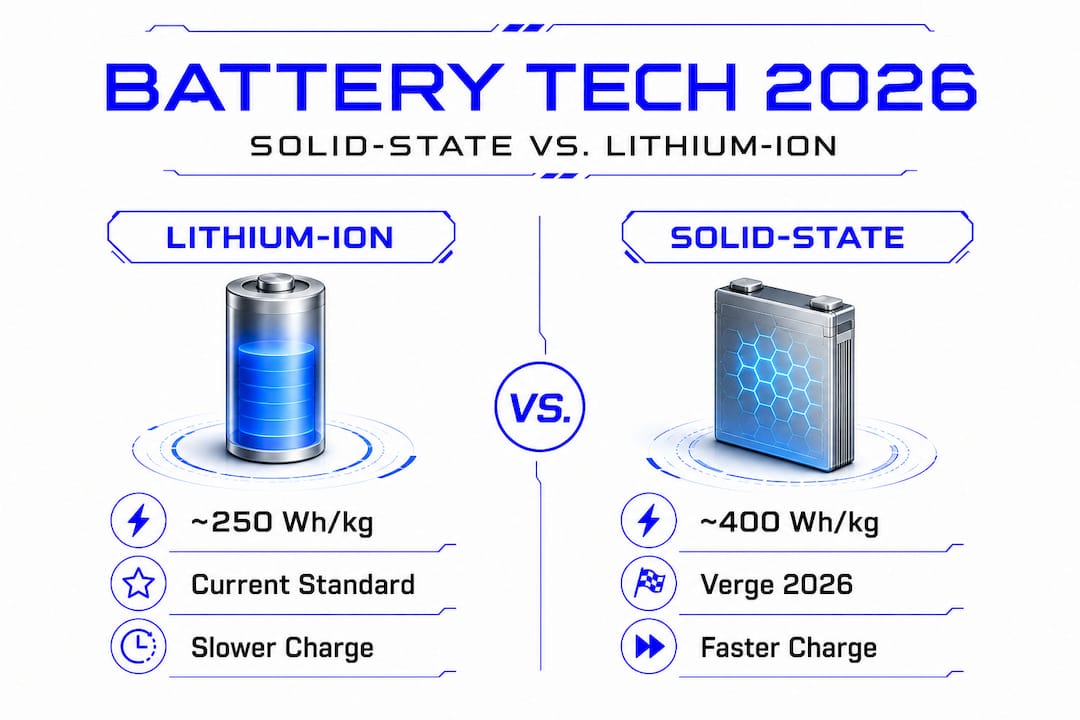
Battery spec comparison: Solid-state vs. current lithium-ion
| Feature | Lithium-ion (current) | Solid-state (Verge 2026) |
|---|---|---|
| Energy density | ~250 Wh/kg | ~400 Wh/kg (claimed) |
| Typical max range | 100 to 150 miles | Up to 370 miles (claimed) |
| Fast charge speed | 30 to 60 min (0 to 80%) | ~10 min for 186 miles |
| Thermal management | Complex liquid/air systems | Simpler, more stable |
| Aftermarket mod support | Widely available | Still developing |
| Price premium | Standard | Significantly higher |
Pro Tip: Always verify range claims with independent tests before changing your ride plan or committing to long-distance routes. Manufacturer specs are best-case figures, usually measured at moderate speeds on flat terrain. Check resources like real-world range comparison tips for a clearer picture of what a battery actually delivers in your conditions.
Upgrading battery components on your existing platform is still one of the highest-impact modifications you can make. Better cells, improved BMS settings, and protective covers like upgrading battery components all contribute to real performance and longevity gains, even if you’re not running a solid-state pack yet.
Smarter bikes: Connectivity, OTA upgrades, and diagnostics
Battery chemistry gets the headlines, but software is quietly becoming just as important in 2026. The electric motorcycle’s ECU (electronic control unit) and BMS (battery management system) are no longer static. They’re living systems that change with updates, respond to riding patterns, and flag issues before they become failures.
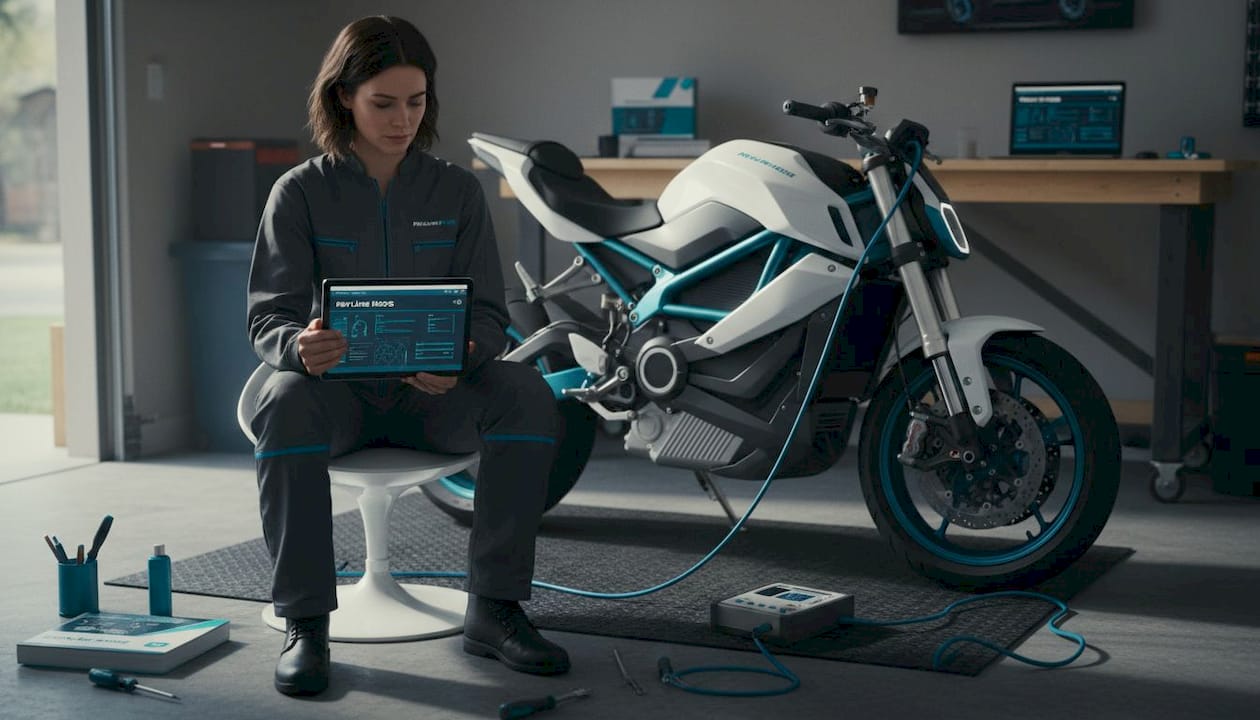
Connected electric motorcycles are now featuring predictive maintenance systems, dynamic service intervals, and app-linked diagnostics that go well beyond a simple warning light. Ducati’s Desmo450 MX, for example, uses sensors and software logic to predict when maintenance is actually needed based on how hard you’re riding, not just how many miles you’ve covered. That’s a fundamentally different approach from fixed service schedules.
OTA (over-the-air) firmware updates are another game changer. Brands are pushing updates that improve throttle response, adjust regenerative braking curves, tighten torque delivery at low speeds, and even unlock new ride modes. Some manufacturers have already demonstrated that a bike purchased at the start of the year can perform noticeably better by year-end simply because of software pushes. If you want to understand the full potential of future-proofing with OTA updates, this technology is the core reason software knowledge is now a rider skill.
Key benefits of connected features in 2026 electric motorcycles
- Remote diagnostics: Spot issues with your battery, motor, or controller before they strand you
- Ride mode customization: Adjust power delivery, regen, and traction settings through an app
- Performance tuning via firmware: Get measurable power and efficiency gains without touching hardware
- Service record tracking: Digital logs build value at resale and help techs diagnose problems faster
- Real-time telemetry: Monitor pack temperature, cell balance, and charge cycles live during a ride
- Security alerts: Instant notifications for unauthorized movement or tampering
For aftermarket riders, connectivity adds a new dimension to the customization game. Before you spend money on a hardware upgrade, check whether a firmware update already addresses what you’re trying to fix. We’ve seen riders drop cash on new throttle assemblies when a software adjustment would have solved the issue in five minutes. Learning to upgrade performance features smartly means combining the right hardware with current firmware, not treating them as separate decisions.
Understanding your bike’s electronics is now as important as knowing your torque specs. Check out this advanced diagnostics guide for a solid foundation on reading and interpreting EV-specific error codes and system data.
Pro Tip: If you’re evaluating two bikes with similar specs, choose the one with active OTA support and a longer software commitment from the manufacturer. A bike that gets regular updates holds more value and gets better over time, unlike traditional ICE builds that are fixed from the factory floor.
Check our performance mods guide to see how software and hardware upgrades work together for maximum effect.
Buying and customizing in 2026: What really matters
With new technology arriving fast, it’s easy to get distracted by big numbers and flashy press releases. The 2026 approach to buying an electric motorcycle should be grounded in practical evaluation, not marketing performance. Real-world buying guidance is increasingly pointing riders toward testing range in their actual conditions, understanding how the bike charges on available infrastructure, and verifying whether the manufacturer supports software updates for the long term.
Here’s a practical buying framework for 2026:
Core questions to ask any dealer or seller:
- What is the actual range at highway speeds in cold weather?
- Does the bike support OTA firmware updates, and for how long?
- What is the warranty on the battery pack, and does it cover capacity degradation?
- Can the bike be modified without voiding the firmware update pathway?
- What is the charging compatibility, and does it work on standard public networks?
Checklist for evaluating a used 2026 electric motorcycle:
- Pull the diagnostic log for error codes and battery cycle count
- Check cell balance variance using the manufacturer’s app
- Verify all software is current and the VIN is registered for updates
- Test regenerative braking behavior at multiple settings
- Inspect connectors, terminals, and any prior crash or moisture damage
“The riders who get the most out of a 2026 electric motorcycle are the ones who test ride multiple platforms in real conditions, score them on a consistent checklist, and prioritize the experience of the bike over the specs on the sheet.” This is the approach endorsed by real-world reviewers and long-distance touring riders who have learned through hard experience.
Customization in 2026 is also more nuanced than it was two or three years ago. High-capacity battery support means you can push more power through a controller without hitting thermal limits as quickly. But it also means your brakes, suspension, and tires need to keep pace. A modder who upgrades the motor controller without addressing braking is creating a dangerous imbalance.
Check our hardware mod tips for a structured approach to layering upgrades correctly. If you’re new to the terminology used across different platforms, the brand terminology explainer is a solid starting point before you start ordering parts. Riders focused on off-road applications should also look at trail enhancement tips to understand how terrain-specific mods interact with the bike’s existing firmware and traction settings.
For a deeper look at what criteria matter most when choosing an e-bike in 2026, the full breakdown covers battery chemistry, charging infrastructure compatibility, and ergonomic fit in ways most dealer conversations skip.
Why specs alone miss the story in 2026
Here’s the honest take after watching this space closely: the rider who wins in 2026 is not the one with the highest peak power number. It’s the one who understands that a motorcycle’s performance ceiling is set at the factory, but everything below that ceiling is shaped by software, maintenance, and smart modifications.
We see this play out constantly in the aftermarket. Someone buys a bike with an impressive claimed range, never updates the firmware, never checks the BMS data, and wonders why performance degrades faster than expected. Meanwhile, a rider with the exact same platform but updated software, a calibrated battery management routine, and a few well-chosen mods is getting noticeably better range and reliability a year later.
The conventional wisdom in the electric motorcycle world still leans heavily on peak wattage and range figures. Those numbers matter, but they’re the starting line, not the finish line. Adaptability is the real metric for 2026. A bike that supports modular upgrades and regular firmware pushes will outlast and outperform a higher-spec machine that’s frozen in its launch-day software.
One sharp customization beats a dozen hollow upgrades every time. A quality brake upgrade that matches your actual riding demands, paired with a firmware tune that optimizes torque delivery for your terrain, does more for your experience than stacking raw power on top of an unbalanced platform. Build for adaptability, not just for the spec sheet.
Pro Tip: Design your build with the expectation that battery and software tech will jump significantly each year. Choose platforms with open upgrade paths and active development communities so you’re not locked into last year’s ceiling.
The riders and modifiers getting the most out of 2026 machines are using every tool available, including diagnostics, firmware, and quality parts from our performance mods guide, to extract real-world gains instead of chasing numbers on a brochure.
Take your electric ride further with Revline Mods
The 2026 trends we’ve covered point toward one clear direction: riders who invest in the right upgrades at the right time get more from their machines, not just on paper but on the trail and the street. Battery advances, smarter electronics, and adaptable platforms are creating genuine opportunities for riders who know what parts to add and when to add them.
At Revline Mods, we stock the parts that match where electric motorcycle technology is actually heading. Whether you’re looking for an upgraded Surron throttle to sharpen your power delivery, a Supermoto wheelset that transforms your street setup, or a carbon fiber 79Bike battery lid that protects your most valuable component with serious style, you’ll find parts engineered for this generation of electric motorcycles. Browse exclusive deals, fast shipping options, and expert-curated upgrade collections built specifically for Surron, Talaria, 79Bike, and more.
Frequently asked questions
What’s the biggest innovation in electric motorcycles for 2026?
Solid-state batteries with faster charging and much higher range are the standout breakthrough of 2026, with Verge bringing production solid-state bikes to market for the first time.
How will OTA updates change electric motorcycle ownership?
OTA updates boost performance, security, and diagnostics, allowing riders to improve features without hardware swaps. Connected diagnostics and software tuning are now core ownership advantages in 2026.
Are 2026 range claims by manufacturers reliable?
Treat 2026 range figures as best-case manufacturer claims. Solid-state range figures are still framed as claimed performance, and independent road testing is needed before trusting them for route planning.
What features add the most value when customizing a 2026 electric motorcycle?
Prioritize upgrades to battery protection, controller, brakes, and mods that support software compatibility for the best ride quality and resale value on 2026 platforms.
How important are predictive maintenance and diagnostics?
Predictive maintenance and advanced diagnostics reduce downtime and surface issues before they become failures. Connected maintenance systems are becoming a core feature in 2026’s most capable electric motorcycles, making them vital for serious riders.