


Real Benefits of Electric Bike Modifications in 2026
Most cyclists upgrading their e-bikes are chasing one of three things: more performance, better comfort, or a ride that actually looks like theirs. The benefits of electric bike modifications go well beyond raw speed. Done right, aftermarket upgrades, which the industry formally calls e-bike tuning or customization, can transform a stock commuter into something that fits your body, your route, and your style. Done wrong, they can void your warranty, attract fines, or put you in real danger. This guide cuts through the noise so you know exactly what to do, and what to avoid.
Table of Contents
- Key Takeaways
- 1. Benefits of electric bike modifications: the framework
- 2. Battery upgrades for extended range
- 3. Controller tuning for smoother power delivery
- 4. Conversion kits: adding e-assist to a standard bike
- 5. Throttle additions and their practical impact
- 6. Brake and tire upgrades for stopping power
- 7. Suspension improvements for stability and comfort
- 8. Lighting and visibility accessories
- 9. Aesthetic and comfort mods that keep you riding more
- 10. Professional upgrades vs. DIY conversions: a direct comparison
- My take on balancing benefits and risks
- Upgrade your ride with Revlinemods
- FAQ
Key Takeaways
| Point | Details |
|---|---|
| Performance gains require system thinking | Upgrading motor power without matching brakes and tires creates serious safety risks. |
| Comfort mods drive riding frequency | Ergonomic upgrades lead to more consistent riding, which directly supports health benefits. |
| Legal compliance protects you | Staying within EPAC power and speed limits avoids fines, insurance voids, and accident liability. |
| DIY conversions need precision | Wiring quality, sensor calibration, and waterproofing determine whether a conversion lasts. |
| Aesthetic upgrades add real value | Visual and protective mods improve both appearance and component longevity simultaneously. |
1. Benefits of electric bike modifications: the framework
Before you buy a single part, you need a clear picture of what you actually want your bike to do better. Most riders fall into one of these four upgrade motivations:
- Performance: More torque, faster acceleration, longer range
- Safety: Stronger braking, better visibility, more stable handling
- Comfort: Reduced fatigue, better fit, smoother ride quality
- Aesthetics: Personal style, protective finishes, visual identity
The problem is that these categories interact. Pushing motor power without addressing brakes and tires is one of the most common and most dangerous mistakes riders make. Think of the framework as a checklist, not a menu. Each modification should be evaluated against all four categories before you commit.
Pro Tip: Write down your top three riding complaints before researching any mods. The best upgrade is always the one that solves a real problem you actually have.
2. Battery upgrades for extended range
A bigger or better battery is the single most practical upgrade for commuters and long-distance riders. Range anxiety is real, and swapping to a higher-capacity pack directly solves it without requiring any changes to how the bike handles or feels.
The catch is that battery upgrades require careful compatibility checking. Voltage, connector type, BMS logic, and physical fit all have to align. A mismatched battery can damage your controller or create a fire risk. When the swap is done correctly, though, riders routinely see 30 to 60 percent range improvements.
Worth noting: power-focused mods reduce battery efficiency, meaning speed upgrades and range upgrades often work against each other. If you want both, you need a proportionally larger battery, not just a faster controller.
3. Controller tuning for smoother power delivery
The controller is the brain of your e-bike. Tuning it changes how power is delivered, not just how much of it reaches the wheel. A well-tuned controller produces smoother throttle response, better low-speed torque, and more predictable behavior on technical terrain.
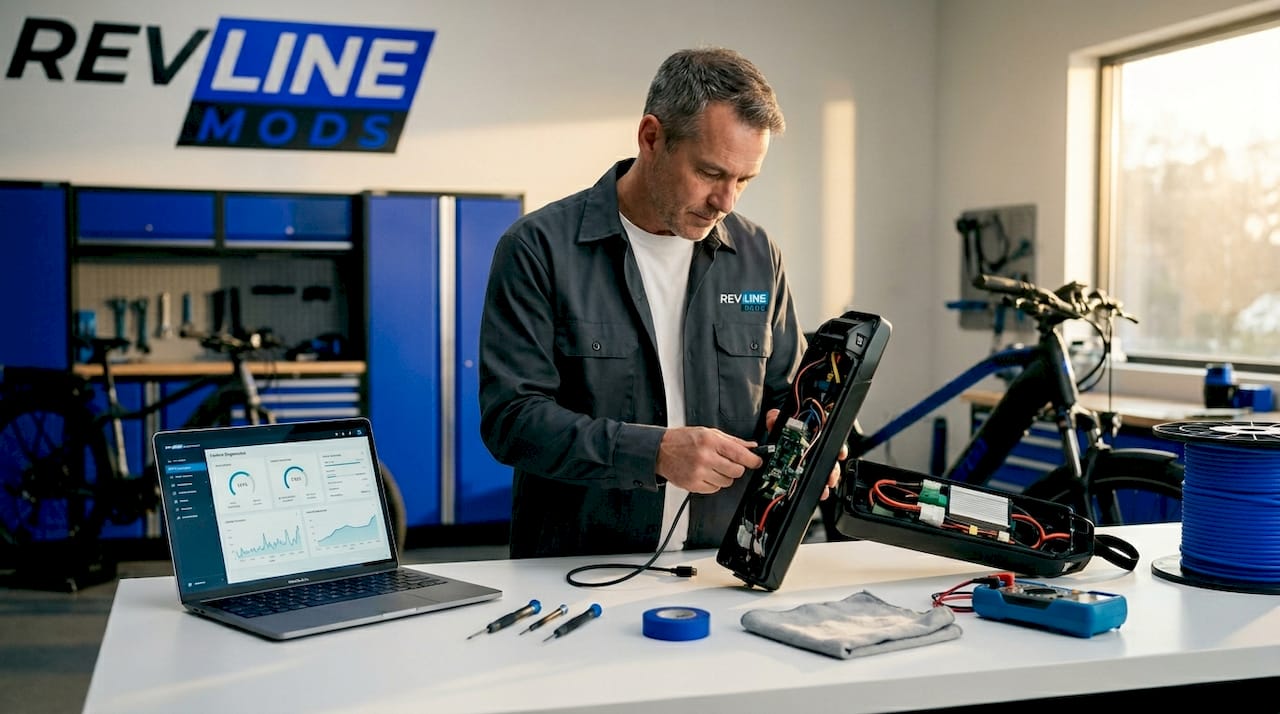
However, modifying controller behavior increases thermal load, current draw, and braking demand across the entire electrical system. It is not just a speed change. It stresses every downstream component. This is why controller tuning should come after you have confirmed your brakes, tires, and frame are rated for the increased load. For more detail on the full picture, electric motorcycle tuning covers technique and system integration well.
4. Conversion kits: adding e-assist to a standard bike
Conversion kits are one of the most talked-about advantages of e-bike upgrades because they let you electrify a bike you already love at a fraction of the cost of buying a factory e-bike. Conversion kits offer real benefits at lower prices, but the trade-offs around battery integration, motor placement, and system cohesion are genuine.
The most important factors that determine whether a conversion succeeds long-term are compatibility, wiring discipline, sensor calibration, and waterproofing. A reliable conversion depends on installation precision far more than on which brand of kit you buy. Rushed wiring or a poorly sealed motor housing will fail within months.
For budget-conscious riders, a quality mid-drive conversion kit on a well-maintained frame can rival a factory e-bike’s performance at roughly half the cost. That math works, but only if the build quality matches.
5. Throttle additions and their practical impact
Adding a throttle to an e-bike that only has pedal-assist changes the riding dynamic entirely. Throttles give you instant power without pedaling, which is genuinely useful for hill starts, intersections, and riders with knee or hip issues.
The trade-off is legal. In many jurisdictions, throttle-equipped e-bikes are classified differently than pedal-assist-only bikes, which affects where you can ride them and whether your insurance covers you. Check your local regulations before adding a throttle. The practical benefit is real, but it has to fit within your legal framework to be worth it.
6. Brake and tire upgrades for stopping power
This is the upgrade most riders skip and most often regret. When you increase motor power or riding speed, your stopping distance increases significantly. The bike’s stock brakes may not be designed for the new performance envelope you have created.
Hydraulic disc brakes are the standard recommendation for any e-bike ridden at speeds above 25 mph (40 km/h). They offer consistent modulation in wet conditions, lower hand fatigue, and shorter stopping distances compared to mechanical discs or rim brakes. Tire upgrades, specifically moving to a wider, higher-tread option, further improve grip and stability.
Increasing motor power without upgrading braking significantly increases the risk of loss of control and electrical failure. This is not a theoretical risk. It shows up in accident data consistently.
7. Suspension improvements for stability and comfort
A better suspension setup does two things at once: it makes the ride more comfortable and it keeps your tires in better contact with the ground, which improves both handling and braking effectiveness. This makes suspension one of the highest-return upgrades available for off-road and mixed-terrain riders.
Air forks and adjustable rear shocks allow you to dial in the setup to your weight and riding style. On rough trails, the difference between a stock coil fork and a quality air fork is immediately obvious. On commuter routes with poor pavement, even a basic suspension seat post makes a noticeable difference over a 45-minute ride.
Pro Tip: If you only have budget for one comfort upgrade, start with suspension. It affects every mile you ride, not just specific situations.
8. Lighting and visibility accessories
Complete visibility is about more than adding a front light. Effective visibility setups require attention to lighting angles, rear visibility, reflective elements, and helmet-mounted options to account for the increased speeds and stopping distances of e-bikes.
A 1,000-lumen front light pointed too high blinds oncoming riders and drivers instead of illuminating your path. Side-angle lighting and spoke reflectors address the “invisible at intersections” problem that causes many urban e-bike accidents. Rear radar lights, which alert you when vehicles approach from behind, are becoming standard on serious commuter builds.
Visibility upgrades are among the safest and most cost-effective modifications you can make. They require no legal review, carry no warranty risk, and directly reduce your crash exposure every time you ride at dawn, dusk, or night.
9. Aesthetic and comfort mods that keep you riding more
Comfort and aesthetics are often treated as optional extras, but the data tells a different story. E-bike commuters who ride consistently achieve moderate-to-vigorous physical activity levels that meet public health guidelines. The key word is consistently. A bike that hurts your wrists, saddle, or back after 20 minutes does not get ridden consistently.
Ergonomic upgrades that make a measurable difference include:
- Saddles: A properly fitted saddle can eliminate the discomfort that cuts most rides short
- Grips: Ergonomic lock-on grips with palm support reduce hand fatigue on longer rides
- Handlebars: Adjustable rise stems let you find the exact position that suits your posture
- Pedals: Wide platform pedals improve power transfer and foot comfort over stock options
On the aesthetic side, visual customizations like wraps, decals, and color-matched covers do more than look good. Protective covers prevent paint chips and corrosion. A bike you are proud of gets maintained better and ridden more. The research backs this up: participants in a New Zealand e-bike pilot reported improvements in both physical and mental health, including better diabetes and joint pain management, through regular e-biking.
10. Professional upgrades vs. DIY conversions: a direct comparison
| Factor | Professional/Factory Setup | DIY Conversion Kit |
|---|---|---|
| Upfront cost | Higher | Lower |
| Integration quality | Optimized from the factory | Depends on installer skill |
| Warranty protection | Usually intact | Often voided |
| Customization flexibility | Limited to spec options | High, but requires knowledge |
| Long-term reliability | Proven with matched components | Variable based on build quality |
| Legal compliance | Typically certified | Rider’s responsibility to verify |
The honest answer is that both approaches work, but for different riders. If you want reliability without technical involvement, a factory-spec upgrade or certified performance part is the safer choice. If you have the skills and want maximum flexibility at a lower price point, a well-executed DIY conversion using quality components can match factory performance.
The detail that most riders underestimate is how much the long-term reliability of a conversion depends on the installation, not just the parts.
My take on balancing benefits and risks
What I have seen over years of working with e-bike enthusiasts is that the riders who get the most out of their modifications are rarely the ones chasing the highest top speed. They are the ones who chose mods that actually fit how and where they ride.
The comfort and safety upgrades consistently deliver the best long-term value. Better brakes, proper lighting, a saddle that fits, and a suspension setup dialed to your weight. These are the changes that make you want to ride on a Tuesday morning when you would otherwise take the car.
The risky territory is power tuning without system upgrades. I have seen riders push their motors past legal limits, void their insurance, and then face a situation where their brakes simply could not stop the bike they had created. The legal limits on e-bike modifications exist because those engineering limits are real.
My recommendation is always to match your modifications to your actual riding style, terrain, and local laws. The best mod list for a daily urban commuter looks completely different from the right setup for a weekend off-road rider. Know what you are building before you start buying parts.
— Revline
Upgrade your ride with Revlinemods
If this article gave you a clearer picture of where to start, Revlinemods has the parts to match your plan. Whether you are focused on performance, protection, or making your bike look like nothing else on the trail, the catalog is built around real riders and real riding.
For riders who want to start with aesthetics and protection together, the 79 Bike Black Out Kit delivers a clean, stealthy finish while adding genuine durability to your build. If you want to protect your motor in style, the chrome motor cover for Surron and 79Bike fits both goals at once. Every product Revlinemods carries is selected for compatibility and build quality, not just looks. Browse the full range and find the upgrade that actually fits your bike, your budget, and the way you ride.
FAQ
What are the safest electric bike modifications to start with?
Visibility upgrades, ergonomic comfort parts, and brake improvements offer real safety and ride quality gains with no legal risk and minimal technical complexity.
Do electric bike modifications void the warranty?
Most manufacturer warranties are voided by modifications to the motor, controller, or battery system. Cosmetic and comfort upgrades typically do not affect warranty coverage.
Is it legal to derestrict an e-bike for higher speeds?
In most jurisdictions, e-bikes with derestricted motors exceeding legal power or speed limits are classified as motor vehicles, requiring registration, insurance, and a license.
Can a conversion kit match a factory e-bike’s performance?
A well-executed conversion using quality components and precise installation can reach comparable performance, but integration and reliability depend heavily on the skill of the build.
Does improving comfort actually make you ride more?
Yes. Research confirms that consistent e-bike riding delivers meaningful physical activity benefits, and comfort upgrades directly reduce the fatigue that stops riders from going out.