


The Role of Lithium Batteries in Ebikes Explained
Most riders think about range, speed, and motor power when they buy an e-bike. The battery is almost an afterthought. That’s a mistake. The role of lithium batteries in ebikes goes far deeper than simply storing charge. Your battery determines how far you ride, how reliably your motor delivers power, and how long your investment lasts. Understanding what you’re actually working with changes how you buy, maintain, and get the most out of your electric bike.
Table of Contents
- Key takeaways
- The role of lithium batteries in ebikes: how it all works
- Why lithium batteries dominate e-bike design
- Battery lifespan, safety, and what actually goes wrong
- What’s coming next in ebike battery technology
- Choosing and maintaining your lithium battery
- My honest take on what most riders get wrong
- Upgrade your ride beyond the battery
- FAQ
Key takeaways
| Point | Details |
|---|---|
| Watt-hours beat voltage | Battery capacity in Wh is the best measure of range, not voltage alone. |
| Lithium dominates for good reason | High energy density and long cycle life make lithium the clear choice over older chemistries. |
| Care habits matter enormously | Storing between 20–80% charge and avoiding heat can add years to your battery’s life. |
| Safety requires active attention | Certified batteries and regular damage checks reduce fire risk and protect your investment. |
| Future tech is coming fast | Solid-state and sodium-ion batteries will reshape e-bike performance within the next few years. |
The role of lithium batteries in ebikes: how it all works
Every time you pedal with assist, your motor pulls energy from a battery pack. The pack’s job is to store as much usable energy as possible in the lightest, most compact form. That’s where lithium-ion chemistry excels. No other widely available battery type comes close on that combination of traits.
Reading battery specs without confusion
Two numbers matter most: voltage and amp-hours (Ah). Multiply them together and you get watt-hours (Wh), which is the real measure of how much energy your battery holds. Think of it as the fuel tank. A bigger Wh number means more miles before you need to recharge.
A practical example: the Lectric ONE long-range e-bike runs a 48V, 14Ah pack, which works out to 672 Wh. That setup delivers up to 60 miles of range in ideal conditions. Voltage also affects how quickly power reaches the motor. Higher voltage means snappier acceleration and better performance on climbs.
| Battery Spec | Typical Value | Real-World Meaning |
|---|---|---|
| Voltage | 36V, 48V, 52V | Higher voltage = stronger, more responsive power delivery |
| Amp-hours (Ah) | 10–20 Ah | Higher Ah = more stored energy per charge cycle |
| Watt-hours (Wh) | 360–1,000 Wh | Best measure of usable range |
| Expected range | 20–80 miles | Varies by assist level, terrain, and rider weight |
Lithium-ion vs. lithium iron phosphate
Not all lithium batteries are the same chemistry. Lithium-ion (Li-ion) packs are the most common in lightweight and road e-bikes because of their high energy density. Lithium iron phosphate (LFP) batteries trade some energy density for better thermal stability and durability, which is why you see them more often in cargo and city e-bikes that sit parked for long periods or carry heavier loads.
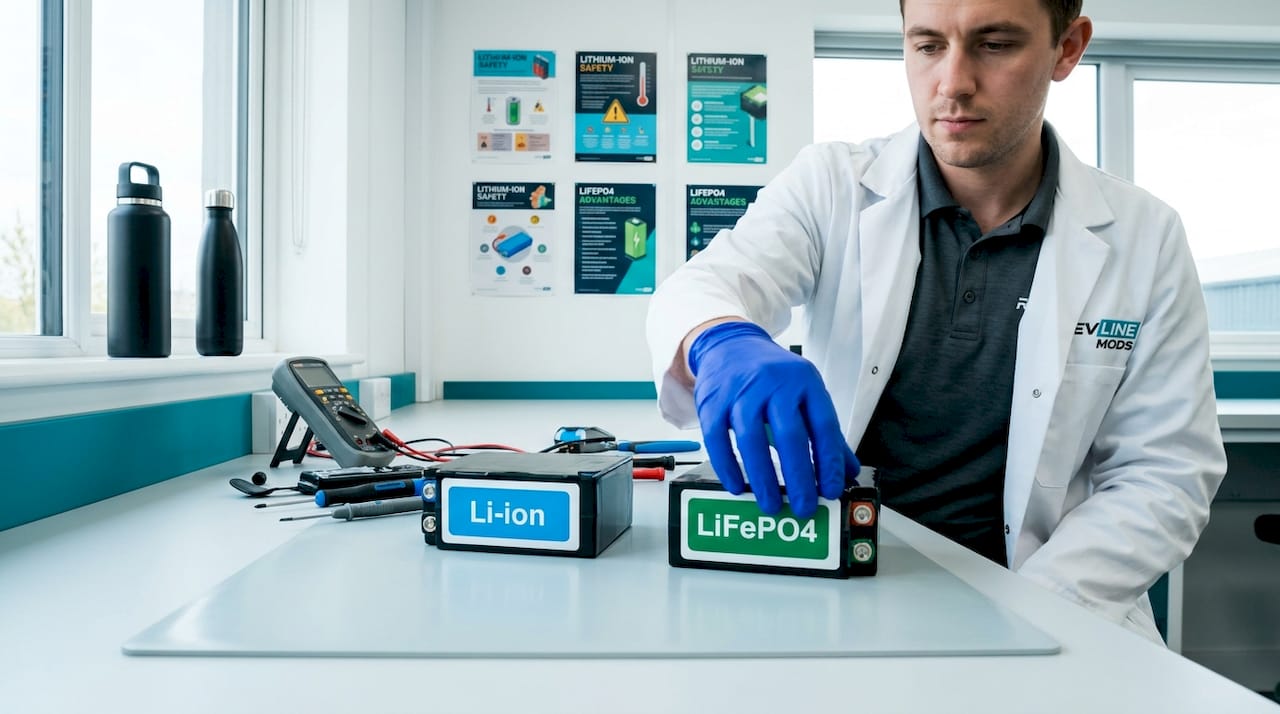
For most recreational riders and commuters, Li-ion is the right call. For high-use work bikes or applications where heat is a persistent issue, LFP earns its extra weight.
Pro Tip: When comparing two e-bikes, ignore the “36V vs 48V” debate and go straight to the Wh number. A 36V, 15Ah pack (540 Wh) will outrange a 48V, 10Ah pack (480 Wh) every time.
Why lithium batteries dominate e-bike design
The shift away from lead-acid and nickel-metal hydride batteries wasn’t gradual. It was decisive. Once lithium chemistry matured for consumer applications, every serious e-bike manufacturer moved to it. Here’s why:
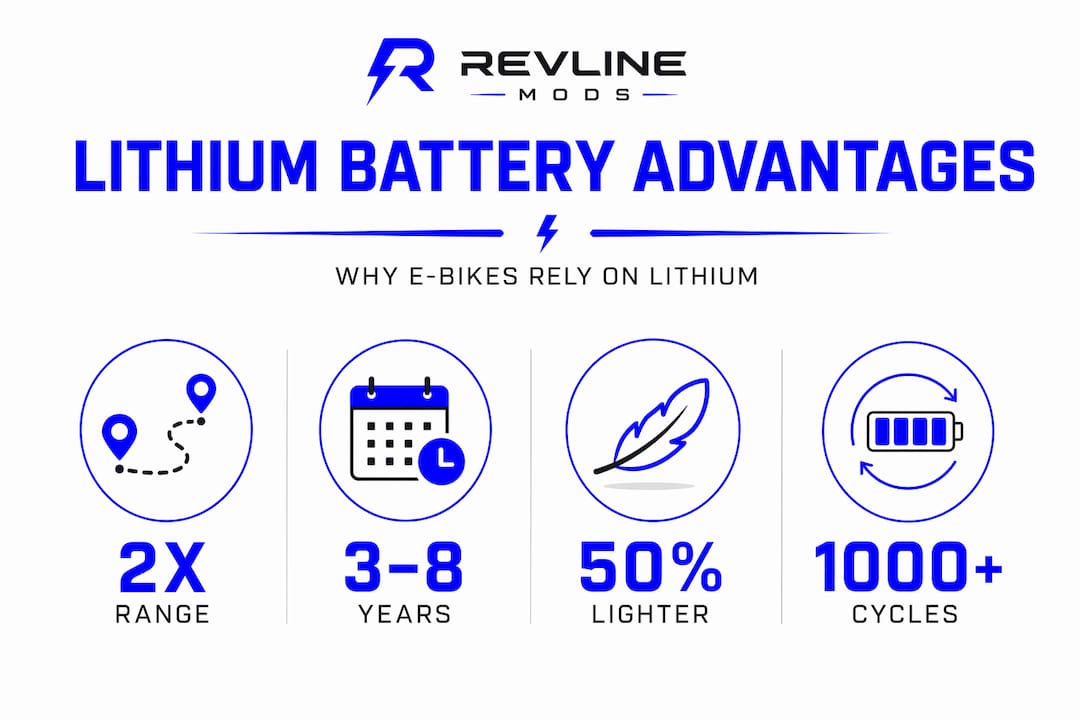
- Energy density: Lithium-ion cells store 130–275 Wh/kg, which is three to five times better than lead-acid. That difference means a lightweight pack you barely notice versus one that adds 20 pounds to your frame.
- Cycle life: A well-maintained lithium-ion pack holds roughly 80% of its original capacity through 500–1,000 charge cycles. That’s three to eight years of real-world use for most riders.
- Temperature tolerance: Lithium batteries perform more consistently across a wider temperature range than nickel-based alternatives, which lose capacity quickly in the cold.
- Low self-discharge: Lithium packs lose roughly 2–3% of charge per month when stored, compared to 15–20% for lead-acid. Your bike is ready when you are.
| Battery Type | Energy Density | Cycle Life | Weight | Best Use |
|---|---|---|---|---|
| Lithium-ion | 130–275 Wh/kg | 500–1,000 cycles | Light | Road/recreational e-bikes |
| Lithium iron phosphate | 90–120 Wh/kg | 1,500–3,000 cycles | Moderate | Cargo/city e-bikes |
| Lead-acid | 30–50 Wh/kg | 200–300 cycles | Heavy | Low-cost or stationary use |
| Nickel-metal hydride | 60–120 Wh/kg | 300–500 cycles | Moderate | Older hybrid vehicles |
The lithium battery advantages for ebikes aren’t marginal. They’re the reason the product category exists at scale today. Without lithium, you’re looking at bikes that weigh more, ride shorter, and wear out faster.
Battery lifespan, safety, and what actually goes wrong
The biggest mistake e-bike riders make is treating the battery as a set-it-and-forget-it component. Battery lifespan is not fixed. Your habits determine whether you get three years or eight years out of a pack.
The standard advice applies here: store your battery between 20–80% charge in a cool, dry place. But there’s a subtler issue most riders miss. Calendar aging is real. Even sitting unused at a high state of charge, a battery loses capacity. High charge levels and heat exposure accelerate the chemical reactions that degrade cells, whether you’re riding or not. Don’t store a bike at 100% charge for weeks at a time.
Safety risks you can’t ignore
Battery fires make news for a reason. In 2025, 31 reported fire incidents were linked to a single major e-bike brand, and some of those fires occurred in batteries that weren’t even charging at the time. That matters because many riders assume the danger window is only during charging.
Safety precautions worth building into your routine:
- Check for physical damage, swelling, or unusual heat after every few rides
- Never charge overnight or leave charging unattended in an enclosed space
- Replace any battery that shows signs of swelling or has been dropped hard
- Use only chargers from the original manufacturer or a verified compatible source
- Register your e-bike with the manufacturer so you receive recall notices promptly
Battery safety isn’t just about good charging habits. It requires inspecting for damage, water ingress, and staying current on recalls as part of your regular maintenance routine.
Certifications matter too. Look for UL 2271 (battery pack) and UL 2849 (entire e-bike electrical system) labels when buying. These standards require testing under abuse conditions, not just normal use.
Pro Tip: When a battery reaches end of life, don’t trash it with regular recycling. Most local bike shops and electronics retailers accept lithium batteries for proper disposal. Lithium cells in landfills create chemical hazards and fire risk.
What’s coming next in ebike battery technology
Ebike battery technology is not standing still. Three developments are worth watching closely, especially if you’re planning a purchase in the next year or two.
- Solid-state batteries replace the liquid electrolyte inside cells with a solid material. The result is higher energy density, faster charging, and a meaningful reduction in fire risk. They’re not mass-market ready yet, but solid-state and sodium-ion technologies are moving from laboratory research to early production.
- Sodium-ion batteries use sodium instead of lithium, which is far more abundant and cheaper to source. They operate better at low temperatures than standard Li-ion, making them interesting for riders in cold climates. Energy density is currently lower, but the cost and temperature advantages are real.
- Smarter battery management systems (BMS) are already improving how existing chemistry performs. Modern BMS hardware balances cell voltages in real time, preventing overcharge in individual cells and extending overall pack life. Buying a bike with an active BMS is not optional anymore. It’s the baseline expectation.
Regulatory pressure is also accelerating change. UL certification requirements for e-bike batteries are tightening, and several major cities have moved to restrict uncertified batteries in apartment buildings. The industry is moving toward better traceability and end-of-life recycling programs, which will eventually affect purchase decisions too. You can track where electric motorcycle trends are heading for a broader picture of where all this leads.
Choosing and maintaining your lithium battery
Practical decisions come down to a short list of priorities.
- Calculate range in Wh, not voltage. Two bikes at the same price can have very different range because one packs 500 Wh and the other 360 Wh. The Wh number tells you what you’re actually buying.
- Choose brands with real replacement support. A battery that fails in year three is only a problem if you can’t buy a replacement. Check that the manufacturer sells replacement packs before you buy the bike.
- Follow the 20–80% rule religiously. Charge to 80% for daily use. Only charge to 100% when you need full range for a specific ride.
- Keep batteries out of heat. Don’t leave your e-bike in a hot car or direct sunlight for extended periods. Heat is the single fastest way to shorten cell life.
- Act on recalls immediately. Check the CPSC recall database if you get a recall notice. A recalled battery is not a minor inconvenience. It’s a fire hazard you need to address.
For more hands-on guidance, the electric bike maintenance guide at Revlinemods covers the full picture of keeping your ride in top condition.
My honest take on what most riders get wrong
I’ve seen a lot of riders make the same error: they obsess over voltage. “Is this a 48V or a 52V system?” The honest answer is that voltage difference rarely changes your ride as much as you expect. What actually changes your ride is the quality of the battery management system, the cell brand inside the pack, and whether the manufacturer actually cares about long-term support.
In my experience, the biggest lithium battery mistakes aren’t about chemistry at all. They’re about behavior. Charging to 100% every night and storing the bike in a hot garage will destroy a premium pack faster than a cheap pack treated well. System-level thinking matters. A certified battery in a well-designed frame, with a good BMS and a rider who checks for damage, will outlast an uncertified pack in a flashy bike every time.
What I’ve learned is that the impact of lithium batteries on your riding experience is almost entirely in your hands once you make the initial purchase. Buy from a brand that offers replacement support. Follow the storage rules. Register for recalls. That’s the realistic path to eight years out of a pack rather than three.
The future technology is exciting. Solid-state and sodium-ion cells will genuinely change what’s possible for everyday riders, but that’s a few years away at scale. Right now, the best thing you can do is get the most out of the lithium-ion pack you already have or are about to buy.
— Revline
Upgrade your ride beyond the battery

Understanding what powers your e-bike is the starting point. Getting the rest of the machine to match that performance is where things get interesting. At Revlinemods, we specialize in the hardware upgrades that make your electric ride feel dialed in from front to back. A powerful battery deserves equally capable brakes. Whether you’re building a commuter or a trail machine, our brake upgrade kit gives you the stopping power your setup demands. For riders who want individual component control, the front brake upgrade is a direct, high-performance option. Browse our full brake collection to find what fits your build, and check out our hardware upgrade guide for a deeper look at what’s worth changing first.
FAQ
How does battery capacity affect ebike range?
Battery capacity in watt-hours directly determines how far you can ride. A higher Wh number means more stored energy and more miles per charge, assuming similar terrain and assist levels.
How long do lithium ebike batteries typically last?
Most lithium-ion e-bike packs last 500–1,000 charge cycles, which translates to roughly three to eight years depending on how well you maintain and store the battery.
What is the safest way to store a lithium ebike battery?
Store your battery at a 20–80% charge level in a cool, dry location. High charge and heat exposure accelerate cell degradation even when the battery is not in use.
What certifications should I look for on an ebike battery?
Look for UL 2271 certification on the battery pack and UL 2849 on the full e-bike system. The Lectric ONE certification standards are a practical benchmark for what a well-specified pack should meet.
Are lithium batteries better than lead-acid for ebikes?
Yes. Lithium-ion batteries offer three to five times the energy density of lead-acid at a fraction of the weight, with a significantly longer cycle life. Lead-acid is no longer a practical choice for modern e-bike applications.