


Top off-road bike enhancement tips for max trail gains
Most electric off-road riders know the feeling: you’ve just installed a new part, hit the trail, and can’t tell if it actually made a difference. The problem isn’t the upgrade itself. It’s the process. Choosing the right enhancements for your Surron, Talaria, or 79Bike involves more than browsing a catalog and picking what looks cool. The riders who consistently get faster, smoother, and more confident on the trail are the ones who understand which changes move the needle and which ones just move money out of their wallet.
Table of Contents
- Mastering tire setup for different terrains
- Fine-tuning your bike’s suspension for control
- Essential aftermarket enhancements for performance and style
- Testing and troubleshooting upgrades effectively
- Our real-world take: Why method trumps gear obsession
- Ready to upgrade your ride?
- Frequently asked questions
Key Takeaways
| Point | Details |
|---|---|
| Match tires to terrain | Select tread design and pressure to suit your riding surface for dramatic performance gains. |
| Tune one setting at a time | Adjusting parts individually helps you pinpoint what works and avoids confusing changes. |
| Upgrade for your needs | Focus on enhancements that fit your riding style, not just the latest gear trends. |
| Test upgrades methodically | Systematic testing delivers the most reliable results from your modifications. |
Mastering tire setup for different terrains
Once you recognize the impact of smart upgrades, tires are your first line of control over traction and handling. Nothing else on your bike touches the ground, so nothing else has a more immediate effect on how your ride feels and performs.
The core principle here is matching your tire to your terrain. Tread design and compound drive grip and wear in ways that pressure alone can’t compensate for. A tightly spaced knob pattern works well on hardpack dirt because it creates a larger contact patch and resists wear on firm surfaces. Loose, widely spaced knobs are built for mud and sand, where the gaps allow the tire to self-clean and bite into soft material. Running the wrong tread on the wrong terrain doesn’t just cost you grip. It costs you confidence, and on technical trails, that matters.
Tire pressure is where many riders leave performance on the table. Running too much pressure on a rocky trail reduces compliance, meaning the tire skips over obstacles instead of conforming to them. Too little pressure on hardpack increases rolling resistance and risks pinch flats. Here’s a quick reference for matching pressure to conditions:
| Terrain | Front pressure (PSI) | Rear pressure (PSI) | Recommended tread |
|---|---|---|---|
| Hardpack dirt | 13–14 | 14–15 | Tight knob, firm compound |
| Mud | 9–11 | 10–12 | Wide spaced, tall knob |
| Sand | 10–12 | 11–13 | Paddle or wide knob |
| Rocky trails | 11–13 | 12–14 | Intermediate knob, soft compound |
| Supermoto (street) | 28–32 | 30–34 | Slick or minimal tread |
If you’re running supermoto wheelset upgrades on your electric bike for mixed riding, keep in mind that street-oriented tires operate at significantly higher pressures than off-road rubber. Swapping between setups without adjusting pressure is one of the most common mistakes riders make.
Pro Tip: Carry a small digital tire gauge and a CO2 inflator on every ride. Dropping your rear pressure by 2 PSI before a sandy section and reinflating before you hit hardpack again is a five-minute adjustment that can completely transform your traction.
Fine-tuning your bike’s suspension for control
With dialed-in tires, the next factor shaping your ride is how your bike absorbs bumps and maintains control over rough terrain. Suspension is the system that translates every trail input into what you feel through the bars and footpegs. Get it wrong and even the best tires won’t save you from a harsh, unpredictable ride.
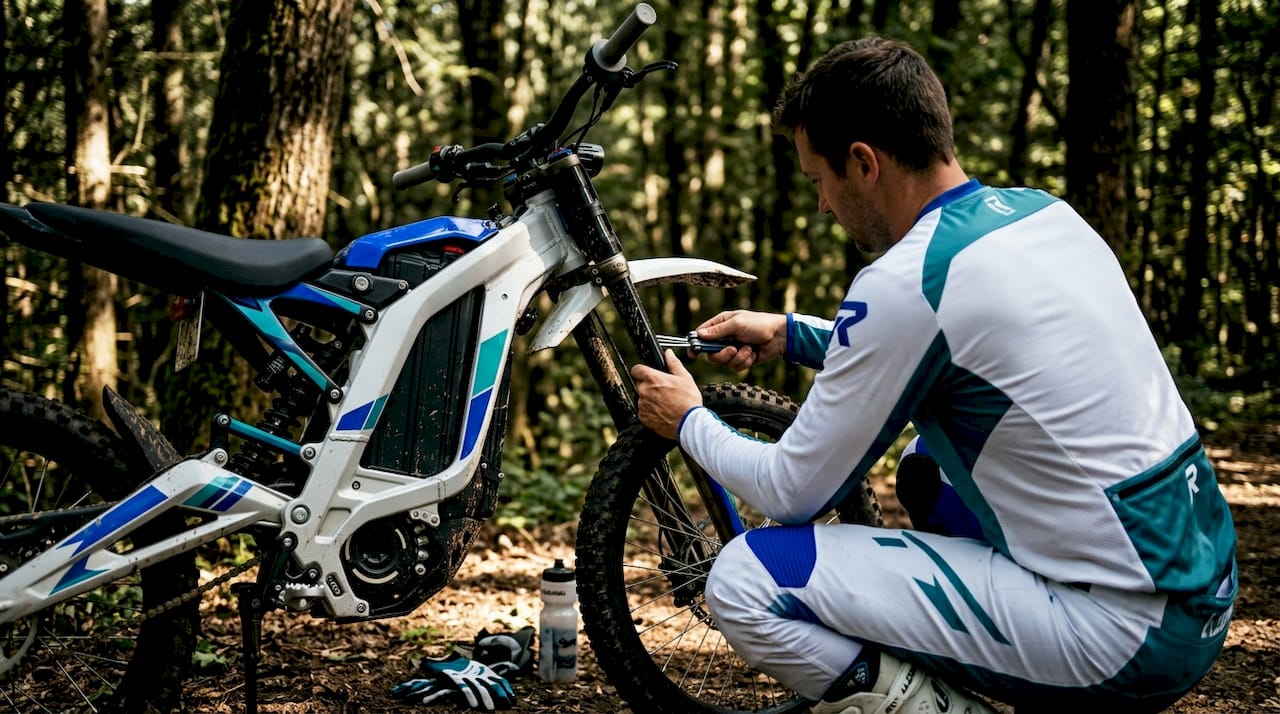
The starting point for any suspension setup is sag, which is the amount your suspension compresses under your weight while sitting in the riding position. For most off-road electric bikes, rear sag should sit between 30 and 35 percent of total travel. If your sag is too low, the suspension feels stiff and kicks back over sharp bumps. Too much sag and the bike wallows through corners and bottoms out on bigger hits.
Once sag is set, work through these steps in order:
- Set your sag with your full riding gear on, sitting in a neutral position on the bike.
- Adjust preload on the rear shock to hit your target sag number without changing spring rate.
- Set rebound damping so the suspension returns quickly but doesn’t kick back. Start with the manufacturer’s baseline setting and adjust one click at a time.
- Tune compression damping to control how fast the suspension dives under braking or compresses over square-edged hits.
- Check fork height in the triple clamp. Raising the forks through the clamps sharpens steering; lowering them adds stability.
- Test on a familiar section of trail after each change so you have a reference point.
“Changing gearing and tire size simultaneously can create confusing feel changes because tires can effectively alter gearing. When troubleshooting traction or acceleration complaints, isolate variables in separate test sessions.”
That advice applies directly to suspension too. If you change your tire compound and your rebound setting at the same time, you won’t know which one improved your corner exit feel. Patience here pays off in real performance gains.
Adding a quality rear shock guard is a smart move alongside any suspension tuning. Rocks, roots, and debris can damage shock bodies and seals, especially on technical trails. Protecting the hardware you’ve just dialed in keeps your settings consistent over time.
Pro Tip: If you’re switching between off-road tires and supermoto wheels, note your suspension settings for each setup in a small notebook or phone app. The different tire profiles and weights will require different rebound and compression settings, and having your baseline written down saves you from starting over every time you swap.
Essential aftermarket enhancements for performance and style
Optimizing your suspension sets a solid foundation, but it’s the right mix of part upgrades that push both style and function to the next level. The best aftermarket parts for electric off-road bikes aren’t just cosmetic. They’re functional improvements that address real weaknesses in stock components.
Here’s how popular aftermarket upgrades stack up against stock parts:
| Component | Stock performance | Aftermarket benefit |
|---|---|---|
| Brakes | Adequate for casual riding | Shorter stopping distance, better modulation |
| Fenders | Basic protection, limited clearance | Improved mud clearance, lighter weight |
| Throttle | Factory calibration, limited feel | Smoother response, adjustable sensitivity |
| Handlebars | Generic bend, standard material | Rider-matched ergonomics, vibration reduction |
| Footpegs | Narrow platform, slippery surface | Wider grip, better foot placement |
| Wheels | Heavy stock rims | Lighter rotating mass, stronger build |
Upgraded mini moto brakes are one of the highest-value swaps you can make. Stock brakes on many electric off-road bikes are sized for general use, not aggressive trail riding. Aftermarket modifications that improve braking performance directly affect safety and confidence on technical descents. Better bite and more consistent modulation let you brake later and carry more speed into corners.
Top upgrades worth prioritizing for every electric off-road rider:
- Brake system upgrade: Improved calipers or rotors for stronger, more predictable stopping
- Fender and bodywork kit: Better mud clearance and a cleaner look, especially with a black out kit for a cohesive aesthetic
- Lightweight wheels: Reducing unsprung weight improves suspension response and acceleration
- Ergonomic handlebars: Matching bar bend to your riding style reduces fatigue on long sessions
- Reinforced footpegs: Wider platforms with aggressive grip patterns give you more control over the bike’s chassis
- Throttle upgrade: A smoother, more linear throttle response helps with traction management on loose terrain
The aesthetic side of upgrades matters more than some riders admit. When your bike looks purpose-built and cohesive, you ride with more confidence. That’s not just psychology. It’s the result of parts that fit together properly and signal that your setup is dialed.
Testing and troubleshooting upgrades effectively
Once you’ve installed key enhancements, dialing in your results is all about smart, methodical testing. This is the step most riders skip, and it’s exactly why so many upgrades end up feeling like a waste of money.
The core rule is simple: change one thing at a time. When you swap tires, adjust suspension, and install new brake pads in the same session, you lose the ability to attribute any change in feel to a specific component. You might get lucky and the bike feels better overall. But if something feels worse, you’ll have no idea where to start.
Follow this testing sequence after any upgrade:
- Establish a baseline lap or section on a trail you know well before making any changes.
- Install one upgrade and return to the same section under similar conditions.
- Ride the section three times to average out any variation from line choice or fatigue.
- Note specific changes: Did braking feel more confident? Did the rear end feel more planted? Be precise.
- Compare to your baseline before deciding whether to keep the setting or revert.
- Document everything: Date, conditions, settings, and your subjective feel score out of 10.
“Isolate variables in separate test sessions to avoid confusing feel changes when troubleshooting traction or acceleration issues.”
Common sources of confusion when testing upgrades:
- Tire size and gearing interaction: A larger tire diameter effectively lowers your gearing ratio. If you swap tires and change sprocket size at the same time, you won’t know which change affected acceleration.
- Temperature and trail conditions: Testing new suspension settings on a wet day versus a dry day gives you incomparable data.
- Rider fatigue: Testing a new brake setup at the end of a two-hour ride versus the beginning produces different results.
- Placebo effect: New parts feel exciting. Ride the same section twice with the same setup and see if your scores stay consistent before crediting the upgrade.
Using a step-by-step upgrade testing approach turns your modifications from guesswork into a repeatable process. Riders who document their changes and test systematically make better buying decisions over time because they know what actually works for their riding style and their specific trails.
Our real-world take: Why method trumps gear obsession
Here’s the uncomfortable truth we’ve seen play out over and over: the rider with a methodical setup process on a mid-spec bike will outperform the rider with a premium build and no testing discipline. Every time.
The electric off-road market is full of genuinely excellent parts. Brakes, wheels, suspension components, and aesthetic upgrades have all improved dramatically over the past few years. But the marketing around these parts creates a belief that performance is something you can simply purchase. It isn’t. Performance is something you build through systematic setup and honest evaluation.
We’ve watched riders spend significant money chasing the next upgrade before they’ve properly set up what they already have. Their suspension sag is off. Their tire pressure hasn’t been adjusted since the bike arrived. Their brake lever reach is set for someone with different-sized hands. Then they install a new shock and wonder why the bike still feels vague.
The riders who get the most out of every upgrade are the ones who treat their bike like a test platform. They know their baseline. They change one variable. They evaluate honestly. And when they do invest in something like high-performance brakes, they can actually feel the difference because everything else is already dialed.
This doesn’t mean you shouldn’t upgrade. Quite the opposite. It means your upgrades will actually pay off. A quality brake system on a properly set up bike is a transformative experience. The same brake system on a bike with wrong sag and mismatched tire pressure is just an expensive part that doesn’t live up to its potential.
The method is the upgrade. Everything else is just hardware.
Ready to upgrade your ride?
If you’ve worked through your tire setup, tuned your suspension, and identified the components that will genuinely move the needle for your riding style, the next step is sourcing parts that are built for your specific bike and the demands of real trail riding.
At Revline Mods, we stock purpose-built upgrades for Surron, Talaria, and 79Bike platforms, including the Ultra Bee brake upgrade for riders who want reliable stopping power on technical terrain, and the carbon fiber battery lid for those who want to reduce weight while adding a premium finish. Whether you’re chasing performance gains or building a bike that looks as fast as it rides, you can explore all enhancements and find exactly what your build needs next.
Frequently asked questions
What tire pressure should I use for sand compared to hardpack?
Use lower pressures in sand (front: 10–12 PSI, rear: 11–13 PSI) and higher for hardpack (front: 13–14 PSI, rear: 14–15 PSI) to match grip demands to the terrain type.
Do I need to upgrade both brakes and suspension for better handling?
Both upgrades help, but prioritize based on your riding style and terrain. Sometimes tuning existing suspension offers more noticeable gains than adding new parts.
How can I avoid mistakes when testing multiple upgrades?
Change and test one component at a time to accurately assess its effect. Isolating variables in separate sessions prevents mixed results and wasted money.
Which enhancement offers the biggest off-road performance boost?
For most riders, optimizing tire selection and pressure yields the largest improvement in traction and control before any hardware upgrade is needed.