


Top performance parts for electric off-road bikes
Finding parts that actually move the needle on your electric off-road bike is genuinely hard. The market is flooded with flashy product pages built on vague promises rather than real-world data, and sorting the genuine performance gains from marketing noise takes more work than it should. This guide cuts through that by focusing on upgrade categories with verifiable benchmarks: suspension, throttle controls, and motor systems. Whether you ride Surron, Talaria, or a 79Bike, you’ll leave here knowing what to prioritize, what to skip, and why the evidence behind a part matters just as much as the part itself.
Table of Contents
- How to evaluate performance parts for electric bikes and vehicles
- Suspension upgrades: The most proven track performance gain
- Throttle controls and VCU modules: Unlock smarter drivability
- Motors and thermal upgrades: Endurance for high-torque challenges
- Quick comparison: The best options for different rider goals
- Our take: Why performance evidence matters more than hype
- Upgrade your ride with proven performance parts
- Frequently asked questions
Key Takeaways
| Point | Details |
|---|---|
| Suspension is king | Upgraded suspension offers the most measurable track and trail performance gains. |
| Control modules optimize feel | Throttle and regen mapping customize how your bike handles off-road power and braking. |
| Motor upgrades boost endurance | Advanced motors and thermal solutions are key for sustained torque and reliability. |
| Data beats marketing | Prioritize parts with real testing evidence, not just big claims. |
How to evaluate performance parts for electric bikes and vehicles
Not all upgrade guides are created equal. Many “best parts” lists for e-motos are marketing-heavy and lack verifiable benchmarks, meaning you’re often buying based on brand reputation alone. That’s a costly gamble when a single suspension kit or motor swap can run several thousand dollars.
Credible upgrades share a few common traits. They have documented test results, not just testimonials. They show measurable improvements in lap time, thermal stability, or handling response under repeatable conditions. And they come from suppliers who publish their evaluation methodology, not just their conclusion.
Here’s what to look for when vetting any performance part:
- Lap time or trail data: Has the part been tested on a controlled loop? Even amateur video with telemetry overlays beats zero data.
- Thermal robustness: Does it hold performance over a 30-minute session or start throttling after five? This is especially important for motor and controller upgrades.
- Fit and reliability: Third-party reviews that mention long-term reliability carry far more weight than launch-week impressions.
- Part compatibility: Confirm that the upgrade is specifically designed for your platform, whether that’s a Surron Light Bee X or a Talaria MX4.
When you start modifying bike hardware for peak output, these criteria become your filter. Every part that passes through should have at least one form of objective evidence backing it up.
Pro Tip: Before buying, search for forum threads and YouTube build videos that show the specific part installed on your exact model. User-generated data is raw and unpolished, but it’s honest. If nobody in the community has posted results from a part, that silence tells you something.
Good trail enhancement tips always start with a clear picture of your current setup’s weaknesses before layering in new hardware.
Suspension upgrades: The most proven track performance gain
Suspension is where the data is clearest. Track-loop testing shows measurable lap-time gains from higher-end suspension upgrades versus stock components, making this the single most documented upgrade category in the electric off-road world.
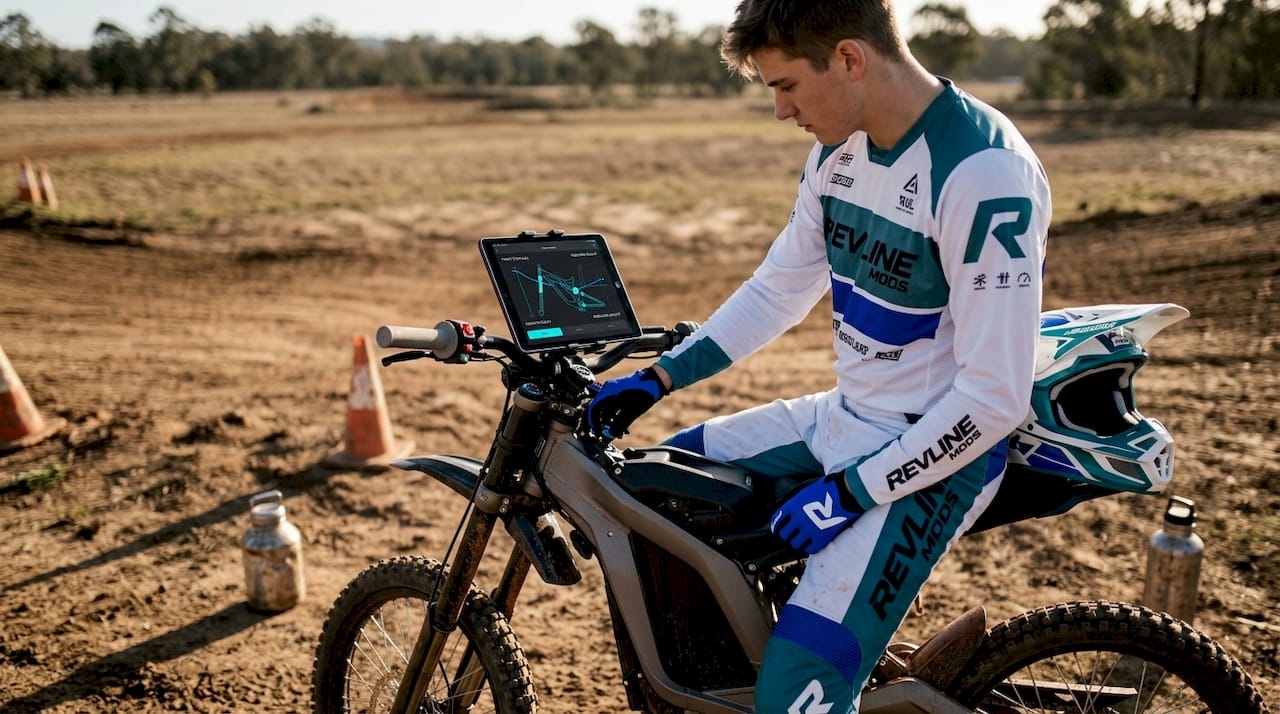
Stock suspension on most budget-to-midrange electric bikes is calibrated for average riders at average speeds. Push past that, and you’ll feel the limits immediately: harsh bottom-out on landings, vague feedback through loose terrain, and fatigue from constant micro-corrections. Upgraded suspension addresses all three by tuning spring rate, damping compression, and rebound characteristics to your weight and riding style.
Key suspension upgrade features that deliver real gains:
- Bottom-out prevention: Upgraded forks and shocks use progressive spring rates that resist full compression without sacrificing small-bump sensitivity.
- Rebound damping control: Adjustable rebound lets you dial in how quickly the suspension recovers after compression, which directly affects corner exit stability.
- Improved rider comfort: Better compliance over square-edge hits reduces arm pump and keeps you riding faster for longer.
- Consistent feel across temperature ranges: Premium suspension oil and seals maintain performance even when components heat up during sustained trail use.
Here’s a quick comparison of popular suspension upgrade options and their documented lap-time impact:
| Upgrade option | Approximate cost | Documented lap-time improvement |
|---|---|---|
| Fastace fork upgrade | $600-$900 | ~0.8 seconds over stock |
| RFloXa shock | $800-$1,200 | ~1.0 seconds over stock |
| EXT full kit | $3,000-$3,500 | ~2.1 seconds over stock |
“The EXT kit reduced lap times by an additional 1.1 seconds over the Fastace fork combined with the RFloXa shock alone. That kind of jump in a controlled test environment is significant and hard to attribute to anything other than the hardware itself.” — Electric Dirt Bike Adults test team
That 2.1-second total improvement over stock might sound modest, but in a timed loop context, it’s the difference between podium positions. It also translates directly to safer trail riding because faster lap times at the same effort level mean you’re in control rather than fighting the bike.
Adding a quality shock guard upgrade alongside your shock protects the investment by keeping debris and mud from degrading your damper seals prematurely.
One thing riders often overlook is warranty value for upgrades. If your suspension manufacturer offers coverage on their components, that’s another data point in their favor. It signals they stand behind the engineering.
Throttle controls and VCU modules: Unlock smarter drivability
While suspension addresses the physical interface between you and the terrain, throttle and VCU (Vehicle Control Unit) modules shape how electrical power gets delivered to the wheel. This distinction matters enormously off-road.
Standard throttle maps on most electric off-road bikes are tuned for predictable linear response. That’s fine for beginners, but experienced riders often want more nuance: softer initial bite for slippery roots, sharper mid-range pull for whoops, and controlled regen braking on descents instead of abrupt deceleration.
A well-designed VCU module like the All Terrain X Mode modifies VCU communication for tailored power delivery and regenerative braking without bypassing motor or inverter protection limits. This is an important detail because some aftermarket “tuning” solutions do bypass factory safeties, which can void warranties and cause premature motor wear.
What a quality throttle or VCU upgrade delivers:
- Custom throttle maps: Select between trail, sport, and endurance modes that adjust power curve shape for different terrain types.
- Regenerative braking tuning: Set the regen level so engine braking feels natural, reducing overreliance on your mechanical brakes during long descents.
- Reduced wheel spin: Softer initial throttle in slippery conditions keeps the rear wheel from breaking loose unpredictably.
- Better battery efficiency: Optimized power delivery can extend your range by reducing energy spikes during aggressive acceleration.
Installing a control module upgrade typically involves these steps:
- Check compatibility with your specific bike model and firmware version.
- Download the configuration software and establish a baseline map using your stock settings.
- Install the module inline with your throttle signal wire per the manufacturer’s diagram.
- Begin with the mildest available map and ride one full trail loop before adjusting.
- Gradually increase aggressiveness in the map until you find the response that matches your style.
Pro Tip: Balance your regen setting carefully before reducing brake pad reliance. High regen on wet terrain can cause the rear wheel to lock unexpectedly, especially at lower speeds where the bike’s weight is already shifting forward. Test regen changes on a flat open area first.
Understanding how these systems interact is easier when you have a solid grip on brand terms explained in plain language, especially if you’re newer to the electric off-road world.
Pair your module with an upgraded throttle that gives you better tactile feedback and consistent signal output for cleaner maps.
Motors and thermal upgrades: Endurance for high-torque challenges
For riders who push their bikes through sustained, demanding terrain like rocky enduro stages or multi-hour desert trails, the motor and its thermal management become the limiting factor. Motor architecture and thermal robustness are core determinants under high-torque off-road conditions, particularly during events where consistent output over time matters more than peak burst power.
Axial-flux motor designs have gained significant attention in the off-road electric racing community specifically because they generate high peak torque in a compact, lightweight package while managing heat more effectively than some traditional radial designs. Their disc-shaped rotor geometry allows for better thermal dissipation across a larger surface area, which is the engineering reason they hold up better in sustained hard use.
Motor and thermal upgrade options worth considering:
- Axial-flux motor conversion kits: Offer dramatic peak torque improvements and better heat shedding for sustained climbs and enduro stages.
- Aftermarket motor covers: Protect the motor from mud packing and provide some additional airflow routing around critical heat zones.
- Thermal interface materials: Upgraded thermal pads between the motor housing and frame improve heat transfer to the chassis, which acts as a secondary heat sink.
- Temperature monitoring systems: Installing a real-time temp gauge lets you catch thermal throttling events before they turn into a full shutoff.
| Motor type | Peak torque | Thermal performance | Best use case |
|---|---|---|---|
| Stock radial motor | Baseline | Moderate | Trail riding, casual use |
| Upgraded radial motor | +15-25% | Moderate to good | Aggressive trail, light racing |
| Axial-flux conversion | +40-60% | Excellent | Enduro, sustained racing, extreme terrain |
A quality motor cover upgrade may seem like an aesthetic choice, but it also provides a meaningful layer of protection against the debris ingestion and moisture intrusion that accelerate motor wear over time.
Quick comparison: The best options for different rider goals
Now that we’ve covered each category individually, it helps to see how they stack up against each other when you’re working with a real budget and a specific riding context. Suspension, control modules, and motor upgrades each serve distinct performance priorities, and combining them strategically delivers more than any single upgrade alone.
| Upgrade type | Primary benefit | Best for | Approx. cost range |
|---|---|---|---|
| Suspension kit | Lap time, handling, control | Track riders, trail shredders | $600-$3,500 |
| Throttle/VCU module | Power delivery, regen tuning | Technical trail, enduro | $150-$500 |
| Motor upgrade | Peak torque, thermal endurance | Extreme terrain, racing | $800-$3,000+ |
| Motor cover/guard | Protection, thermal management | All riders | $50-$200 |
| Supermoto wheelset | Street/track transition, stability | Dual-use riders | $300-$700 |
Recommended upgrade stacks by riding style:
- Trail rider on a budget: Start with a throttle module and a shock guard. You’ll get better drivability immediately without breaking the bank.
- Track-focused rider: Prioritize the EXT suspension kit first. The lap-time gains are documented, and the handling improvement changes the ride experience fundamentally.
- Enduro or racing competitor: Layer in a motor upgrade alongside suspension. Thermal robustness and peak torque hold you back more than anything else in sustained hard use.
- Dual-use commuter and weekend rider: A supermoto wheelset and throttle module give you the versatility to transition between trail and road contexts without separate bike builds.
The full bike modification guide walks through how to sequence these upgrades when you’re planning a longer-term build rather than a single purchase.
Our take: Why performance evidence matters more than hype
Here’s the honest truth that most parts guides won’t tell you: the upgrade market for electric off-road bikes is still relatively young, and standards for performance documentation are inconsistent at best. That creates a real problem for riders who don’t have the time or budget to be guinea pigs.
We’ve seen riders drop serious money on motor kits based on a single influencer video, only to find the thermal management fails within three hard trail sessions. We’ve also seen skeptics dismiss budget-friendly suspension swaps that, with proper setup, delivered results close to premium options. The variable in both cases wasn’t the price. It was the quality of the testing behind the purchase decision.
The most credible performance evidence comes from well-documented test programs or controlled measurements, not unboxing videos or spec sheet comparisons. This means seeking out community forums, independently filmed loop tests, and build threads from riders who have actually ridden the part across multiple sessions in different conditions.
The other mistake we see constantly is upgrade sequencing. Riders buy a motor upgrade before fixing a stock suspension that’s already bottoming out. That’s like fitting racing slicks on a car with worn shocks. The constraint is the suspension, not the power. Fix the bottleneck first, then layer in power and control upgrades as your riding level demands more.
Pro Tip: Before committing to any upgrade over $500, ask the seller or manufacturer directly for test data or independent reviews from riders on your specific platform. A good supplier will have that information ready. A supplier who can’t provide it is telling you something important.
Start with your real trail enhancement tips and use your actual riding weaknesses as the specification sheet for every upgrade decision. That process eliminates most of the noise from the market immediately.
Upgrade your ride with proven performance parts
If you’re ready to move past research and into real hardware, Revline Mods stocks aftermarket parts chosen for performance credentials, not just aesthetics.
Start with the upgraded throttle for sharper, more consistent signal output that pairs perfectly with any VCU module upgrade. Protect your shock investment with the Talaria MX3/4/5 rear shock guard, built specifically to handle trail debris without compromising damper performance. And if you’re building a dual-purpose machine, the 17" OEM supermoto wheelset gives you road-ready stability without sacrificing the agility that makes electric off-road bikes so addictive. Every product on the site is selected with riders in mind, not marketing budgets.
Frequently asked questions
Which suspension upgrade offers the best lap-time gains?
Track testing shows that a full EXT suspension kit delivers the largest lap-time improvement, reducing times by approximately 1.1 seconds beyond what the Fastace fork and RFloXa shock combination achieves on their own.
Do throttle/VCU modules increase my bike’s power?
No. These modules refine how existing power is delivered and how regenerative braking behaves, but VCU modules do not bypass factory motor protection or temperature limits.
What motor features matter most for extreme off-road use?
Thermal robustness and peak torque are the two most critical factors, since motor architecture and thermal robustness determine whether a motor can sustain performance across a full demanding session rather than just the first few minutes.
How can I identify credible performance parts?
Look for parts backed by measurable data from test programs or controlled trials. The most credible performance evidence comes from documented, repeatable testing rather than manufacturer marketing materials.