


What is an electric motorcycle: A guide for off-road riders
Most riders who haven’t spent time on an electric motorcycle assume they’re just quieter versions of gas bikes, maybe a bit slower, definitely less exciting. That assumption is wrong. Understanding what is an electric motorcycle means recognizing it as a fundamentally different machine: an electric-motor-powered vehicle that produces instant torque from zero RPM, requires no clutch work, and opens up a style of riding that gas bikes simply can’t replicate. For off-road enthusiasts building or upgrading bikes like the Surron, Talaria, and 79Bike, knowing the technology underneath matters as much as knowing which parts to bolt on.
Table of Contents
- What is an electric motorcycle and how does it work?
- Electric motorcycle classification and legal differences
- How electric motorcycle performance compares to traditional gas bikes
- Charging times and battery management for off-road electric motorcycles
- Safety and rider experience differences with electric motorcycles
- A fresh take on customizing and tuning electric off-road motorcycles
- Upgrade your electric off-road bike with Revline Mods
- Frequently asked questions
Key Takeaways
| Point | Details |
|---|---|
| Electric motorcycles basics | They use batteries and electric motors to offer instant torque and zero emissions, differing from gas bikes mechanically and legally. |
| Legal classifications matter | E-motos exceed e-bike power/speed limits and require licensing, so upgraded off-road bikes must be checked for compliance. |
| Performance trade-offs | Electric bikes excel in acceleration and maintenance but often have shorter range and longer recharge times than gas motorcycles. |
| Charging varies widely | Standard AC chargers take several hours while DC fast chargers can cut charging time to under 90 minutes, depending on battery size. |
| Custom tuning requires balance | Upgrading power and regen settings impacts battery health and handling, and should be matched to terrain and legal constraints. |
What is an electric motorcycle and how does it work?
At its core, an electric motorcycle replaces the gasoline engine, fuel tank, and transmission with a battery pack, electric motor, and controller. The controller acts like the brain, regulating how much power flows from the battery to the motor in response to your throttle input. No clutch, no gears, no engine warm-up. You twist and go.
The key components work together as a single electrical system:
- Battery pack: Lithium-ion cells store energy measured in kilowatt-hours (kWh). Larger packs mean longer range and more sustained power output.
- Electric motor: Converts electrical energy into mechanical force. Hub motors sit in the wheel, while mid-drive motors are mounted centrally for better weight distribution, which is typical on performance off-road platforms.
- Controller: The power regulator between battery and motor. This is the tuning target for performance riders.
- Regenerative braking system: Recovers kinetic energy during deceleration and feeds it back into the battery, improving overall efficiency, especially on descents.
That instant torque is the defining ride characteristic. There’s no power band to chase, no RPM range to stay in. The motor delivers maximum torque from a dead stop, which makes low-speed technical riding more manageable and hard acceleration more immediate. For trail riding and tight single-track, that changes everything.
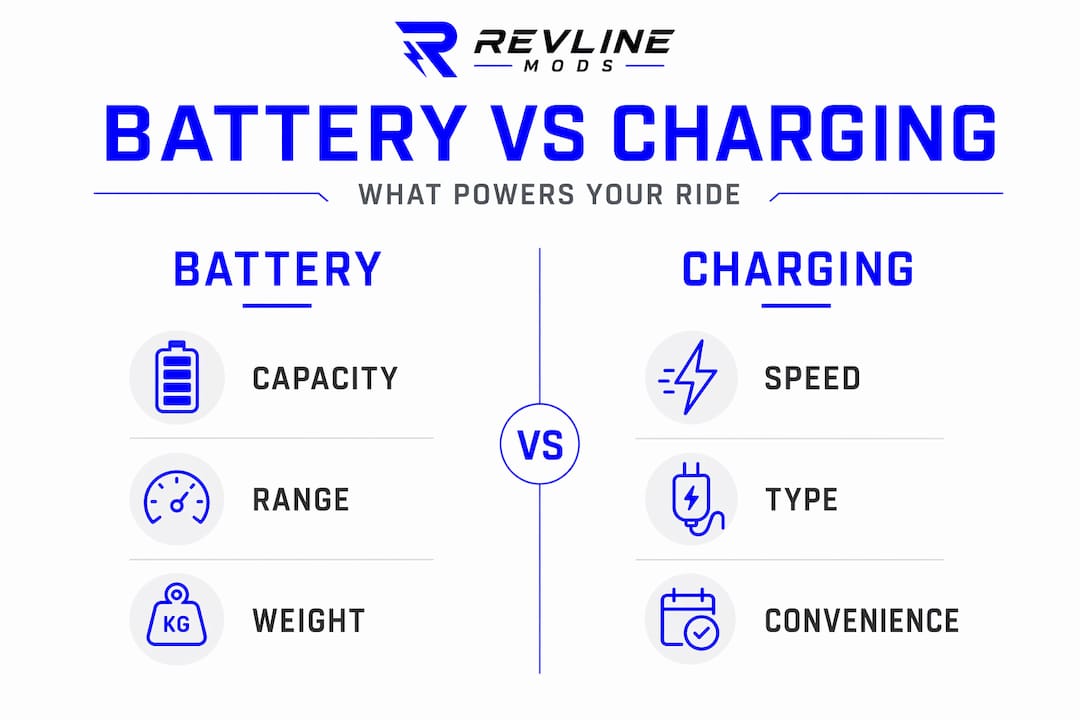
Battery capacity directly determines how much riding you get per charge, and the charger type determines how fast you can get back out there. Following electric motorcycle technology trends matters because battery energy density and controller capability are both improving rapidly, and the hardware you choose today affects your upgrade path tomorrow.
Electric motorcycle classification and legal differences
This is where riders run into trouble, especially after upgrading. Not every electric two-wheeler is legally the same, and the distinctions are written into federal and state law.
Under federal law for low-speed e-bikes, low-speed electric bicycles are defined by two hard limits: motor power under 750 watts and a top speed under 20 mph. If your bike exceeds either of those thresholds, it is no longer legally an e-bike. It becomes a motor vehicle.
That distinction has real consequences:
- Registration: Motor vehicles require DMV registration; e-bikes do not.
- Licensing: Riding a motor vehicle on public roads requires a valid motorcycle license in most states.
- Trail access: Many off-road trail systems that allow e-bikes explicitly prohibit e-motos. After a power upgrade, your access may change.
- Insurance: Motor vehicle classification often triggers mandatory liability insurance requirements.
Pedals don’t save you here. As PeopleForBikes has documented, e-motos with pedals are still regulated as motor vehicles when they exceed power and speed thresholds. A Surron Light Bee with stock hardware already sits in legal gray territory depending on your state. After tuning the controller for more power, that gray area gets smaller fast.
Understanding electric motorcycle terminology around these classifications helps you communicate accurately with trail managers, DMV staff, and local law enforcement, which saves time and avoids surprises.
How electric motorcycle performance compares to traditional gas bikes
The performance gap between electric and gas motorcycles is more specific than most people realize. Electric motorcycles don’t win everywhere, but where they win, they win decisively.
| Performance factor | Electric motorcycle | Gas motorcycle |
|---|---|---|
| Acceleration (0-60 mph) | Instant torque, ~30% faster | Builds through RPM range |
| Maintenance frequency | Very low (no oil, fewer parts) | Regular intervals required |
| Long-distance range | Limited by battery capacity | Refuel in minutes anywhere |
| Noise level | Extremely quiet | Loud by comparison |
| Gear shifting | None required | Manual or automatic |
| Battery/fuel cost per mile | Lower in most regions | Higher and fuel-price dependent |
Instant torque and smoother acceleration without shifting gears gives electric motorcycles a clear edge in stop-and-go or technical terrain. Maintenance time can run 85% lower compared to gas bikes because you’re eliminating oil changes, air filter service, carburetor or fuel injection maintenance, and valve adjustments.
Where gas bikes win is range and refueling. If you’re doing a 200-mile dual-sport day in the desert, a gas bike is still the practical choice. But for a two-hour trail session, a motocross track day, or tight woods riding, range anxiety rarely applies.
Pro Tip: Battery degradation is gradual, but measurable. Track your real-world range every few months. A meaningful drop in range at the same riding intensity is your first sign the battery needs attention, not the charger, not the controller.
For riders building toward peak performance, checking out performance parts for electric off-road bikes gives you a clear picture of where hardware upgrades actually move the needle.
Charging times and battery management for off-road electric motorcycles
Charging strategy is part of riding strategy. If you treat charging as an afterthought, you will run out of power at inconvenient times or shorten your battery’s lifespan faster than necessary.
AC and DC charging times vary significantly:
- Standard AC home charging: 3 to 8 hours depending on battery size and charger output. Fine for overnight charging before a morning ride.
- Level 2 AC charging: Faster wall unit, typically 1 to 3 hours, requires installation of a dedicated circuit.
- DC fast charging: 30 to 90 minutes for compatible systems. Not all electric motorcycles, especially off-road-oriented platforms, support DC fast charging without hardware modification.
| Charger type | Charge time | Best use case |
|---|---|---|
| Standard AC | 3-8 hours | Overnight at home |
| Level 2 AC | 1-3 hours | Between riding sessions |
| DC fast charge | 30-90 minutes | Field charging during longer trips |
Controller tuning affects more than just power output. Running aggressive power modes increases the electrical load on the battery, raises operating temperature, and compresses your range. Heat is the primary enemy of battery longevity. Riding in extreme modes on a hot day with a partially degraded pack stacks every risk factor at once.
Regenerative braking is tunable too. More regen on steep descents means more energy recovery and stronger engine braking. Less regen on flat terrain gives a more natural, flowing ride feel. Matching your regen map to the terrain you ride most often is one of the simplest and most effective tuning moves available.
Pro Tip: Cold batteries charge slower and deliver less peak power. On cold-weather rides, let your bike warm up for a few minutes before pushing hard. On the charging side, never store a lithium pack fully discharged. A 20% to 80% charge range maximizes long-term cell health.
Pair battery knowledge with hands-on skills from DIY electric motorcycle performance upgrades and electric motorcycle tuning techniques to build a system that performs and lasts.
Safety and rider experience differences with electric motorcycles
Electric motorcycle safety has two dimensions most new riders underestimate: what the bike does differently, and what others around you expect.
The instant torque is the first adjustment. On a gas bike, there’s a mechanical delay between throttle input and power delivery. On an electric motorcycle, the response is essentially immediate. Riders coming from gas bikes often apply the same throttle inputs they’re used to and get surprised. That’s manageable in open terrain, but on a technical trail with tight obstacles, it demands precision.
Key safety adjustments for electric motorcycle riders:
- Throttle control: Start with conservative inputs until you internalize the response curve. The learning window is short but real.
- Regenerative braking: The deceleration feel changes depending on your regen setting. High regen can unsettle the rear wheel on loose terrain if you’re not anticipating it.
- Visibility: Electric motorcycles are significantly quieter, which means pedestrians and other riders won’t hear you coming. High-visibility gear, running lights, and an audible alert device address this directly.
- Electrical inspection: Battery connections, motor phase wires, and controller heat dissipation should all be checked regularly, especially after hard riding.
“The quietness that makes electric motorcycles so pleasant to ride is the same characteristic that requires riders to actively compensate for reduced audible presence. Gear and lighting are not optional safety measures, they are required adaptations.”
Pro Tip: When switching from gas to electric, spend your first few sessions on terrain you know well. Familiar ground lets you focus on learning the new inputs rather than navigating unfamiliar obstacles simultaneously.
For specific protection and weatherproofing ideas that support safe riding in varied conditions, electric motorcycle safety tips covers practical steps worth reading before your next build.
A fresh take on customizing and tuning electric off-road motorcycles
Here’s what most modification content gets wrong: it frames upgrades as individual wins. Bigger battery. Faster controller. More power. Each mod gets treated like a standalone improvement, and riders end up with a bike that has mismatched components pulling in different directions.
The truth, backed by real-world tuning experience on performance electric enduro bikes, is that battery, controller, and regen mapping function as a single thermal and electrical system. Add peak power without accounting for the battery’s thermal ceiling and you’ll accelerate degradation, not performance. The battery that feels strong in winter may throttle output significantly on a hot August trail day if your thermal management isn’t matched to your power demands.
Custom regen maps are underused by most riders on platforms like Surron and Talaria. A terrain-specific regen profile, looser on flat hardpack, stronger on downhill technical sections, improves energy recovery and gives you a more natural ride feel without any hardware changes. That’s free performance, and almost nobody talks about it.
After any power upgrade, the legal classification conversation isn’t optional. What starts as an off-road-only tuned bike sometimes ends up being ridden on roads. Once that happens, you’re in motor vehicle territory, and the compliance gap becomes your legal exposure.
Effective tuning on platforms like these separates riders who chase numbers from riders who build bikes they can actually ride better and longer. Explore performance parts for electric motorcycles and electric motorcycle tuning tips as a system, not a parts list.
Upgrade your electric off-road bike with Revline Mods
You’ve built a solid foundation of knowledge. Now it’s time to put it to work on your actual build.

Revline Mods carries parts developed specifically for the off-road electric platforms you ride. Protect your suspension with a Talaria shock guard built for MX3, MX4, and MX5 models, keeping trail debris out of your rear shock before it causes real damage. Upgrade your stopping power with the Ultra Bee brake kit for the kind of controlled, confident braking that technical terrain demands. Want to protect your motor while standing out on the trail? The Surron chrome motor cover delivers both durability and a clean look for Surron and 79Bike builds. Every part in our catalog is chosen with off-road function in mind, not just appearance.
Frequently asked questions
What is the key difference between an electric motorcycle and an electric bicycle?
Electric motorcycles have motors over 750 watts and can exceed 20 mph without pedaling, making them regulated as motor vehicles that require licensing and registration, unlike low-speed electric bicycles that fall under federal e-bike limits.
How long does it usually take to charge an electric motorcycle?
AC charging typically takes 3 to 8 hours depending on battery size and charger output, while compatible DC fast charging can bring that window down to 30 to 90 minutes.
Are electric motorcycles quieter than gas motorcycles?
Yes. Electric motorcycles reduce noise by roughly 75% compared to gas bikes, which improves rider comfort but requires active visibility measures like high-visibility gear and running lights.
Can I upgrade my off-road electric motorcycle’s power without legal issues?
Upgrades that push your bike past e-bike power or speed thresholds trigger motor vehicle regulations, so check your local DMV rules and trail access policies before and after any significant power modification.
What safety tips are recommended for new electric motorcycle riders?
Practice throttle control and regenerative braking in familiar, controlled terrain first, use high-visibility gear to offset the bike’s quiet approach, and inspect electrical systems regularly, especially the battery connections and controller heat management.