


Why Off-Road Electric Bikes Win on Every Trail
Off-road electric bikes get dismissed as toys by riders who haven’t spent a full day on one. That’s the misconception this article is here to correct. The case for why off-road electric bikes matter to serious adventure seekers is built on extended range, terrain-conquering capability, reduced fatigue, and a riding experience that genuinely changes how often you get out. Whether you’re comparing options across vehicle types or just starting to research the off-road biking experience, what you’ll find here goes beyond spec sheets into what actually matters on the trail.
Table of Contents
- Key takeaways
- Why off-road electric bikes are built differently
- Real benefits for outdoor riders
- Off-road e-bikes vs electric dirt bikes vs traditional mountain bikes
- Choosing and maintaining your off-road e-bike
- My take on what off-road e-bikes actually change
- Upgrade your off-road electric bike with Revlinemods
- FAQ
Key takeaways
| Point | Details |
|---|---|
| Off-road e-bikes aren’t just toys | They are purpose-built adventure tools with specialized geometry, suspension, and waterproofing for rugged terrain. |
| Range and fatigue are transformed | Pedal assist extends typical rides from 5 to 50 miles and keeps riders in a sustainable aerobic zone. |
| Trail legality matters | Class 1 e-bikes (250W to 750W) have far broader trail access than high-power electric dirt bikes. |
| Spec tuning beats raw wattage | A well-tuned 750W motor outperforms a poorly configured 1000W motor in technical terrain. |
| Maintenance is higher than on-road | Off-road riding accelerates wear on chains, brakes, and suspension seals, making regular upkeep non-negotiable. |
Why off-road electric bikes are built differently
Not all electric bikes are built to take punishment. Understanding what separates a true off-road e-bike from a commuter or a recreational trail bike starts with the frame and works outward from there.
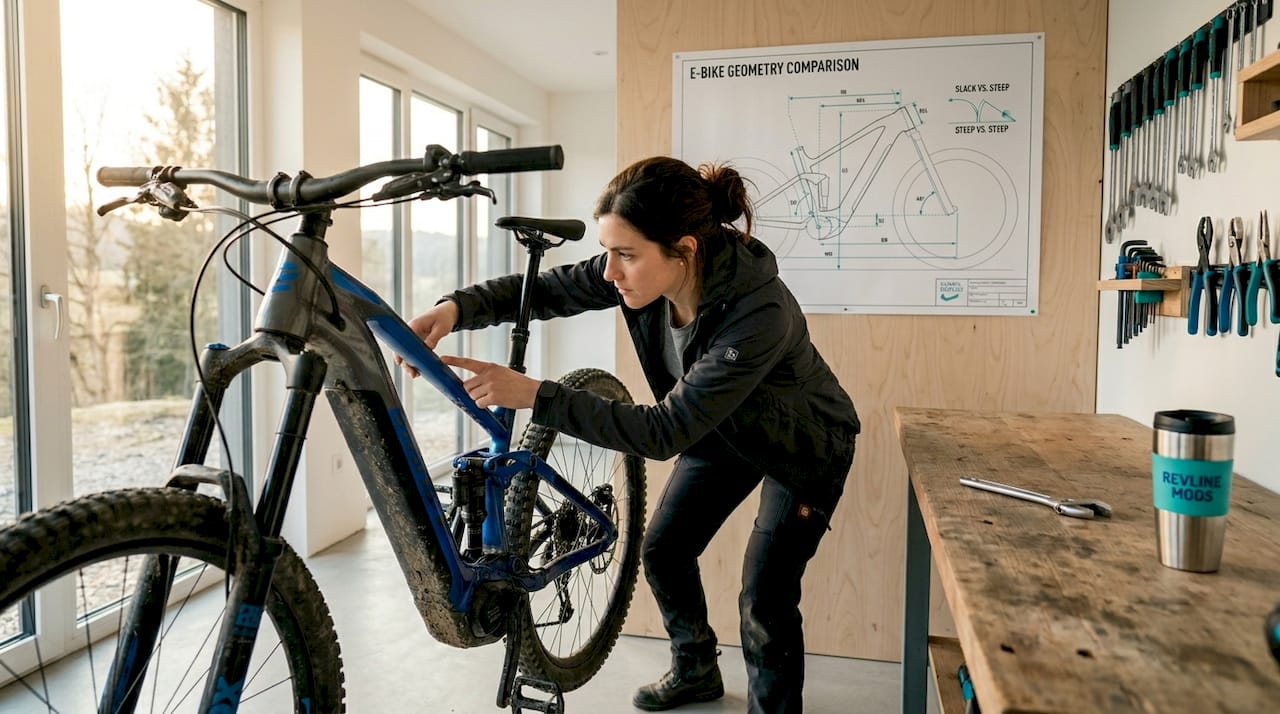
Off-road e-bikes use slack geometry, meaning the head tube angle is more relaxed (typically 64 to 67 degrees) to keep the front wheel planted on steep descents and loose surfaces. The frame itself is built for torsional rigidity so that lateral forces on rocky singletrack don’t flex or crack the structure over time. These are not bikes designed for smooth pavement rides on weekends. They’re built for punishment.
Motor and battery specs that actually matter
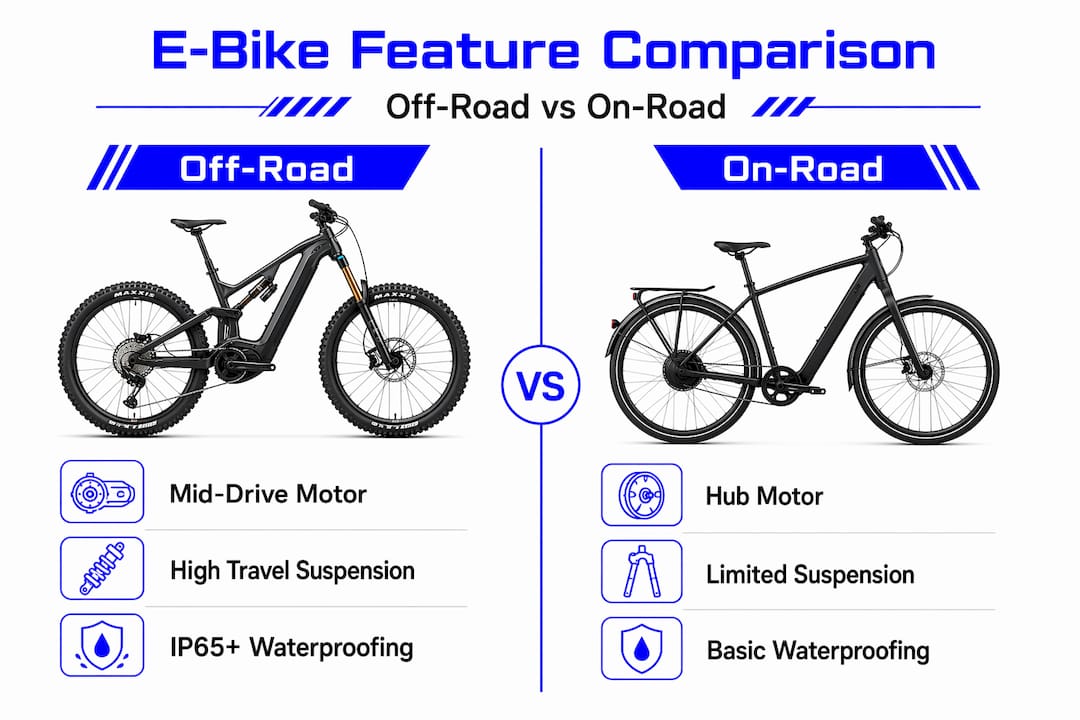
True off-road e-bikes use mid-drive motors rather than hub motors, and the difference is significant. Mid-drive motors sit at the bottom bracket, lowering the bike’s center of gravity and transferring torque directly through the drivetrain. Hub motors push or pull from the wheel axle, which creates uneven weight distribution and makes technical climbing noticeably harder. Battery capacity on capable off-road models runs from 400Wh to 750Wh, giving you the sustained output needed for multi-hour rides without managing anxiety about range cutoffs mid-trail.
Suspension travel is another specification that separates trail-capable bikes from everything else. Off-road models typically offer 100 to 170mm of travel, with four-piston hydraulic brakes providing the stopping power required at speed on rough terrain. You cannot replicate that with mechanical disc brakes when you’re descending a loose rock face at 20 miles per hour.
On-road vs off-road electric bikes: the waterproofing gap
One detail riders overlook when comparing what is on-road vs off-road electric bikes is IP rating. Off-road e-bikes need a minimum IP65 waterproof rating to protect motors and battery management systems from mud spray, creek crossings, and heavy rain. Road-focused e-bikes often carry IP54 ratings, which handle light rain but fail under genuine trail conditions. If your electrical system isn’t properly sealed, one muddy descent can damage components that cost hundreds to replace.
Pro Tip: Before buying, check that the IP rating covers both the motor and the battery management system separately. Some manufacturers rate the battery housing but not the BMS electronics inside it.
| Feature | Off-road e-bike | On-road e-bike |
|---|---|---|
| Motor type | Mid-drive (preferred) | Hub motor (common) |
| Suspension travel | 100 to 170mm | 0 to 50mm |
| Brake system | 4-piston hydraulic | Mechanical or 2-piston |
| IP rating | IP65 or higher | IP44 to IP54 |
| Tire width | 2.4 to 2.8 inches | 1.5 to 2.1 inches |
| Geometry | Slack (64 to 67 degrees) | Upright/road-optimized |
Real benefits for outdoor riders
The practical advantages of off-road e-bikes become obvious the first time you reach a climb that used to end your ride and discover it no longer does. Off-road e-bikes extend typical exploration range from 5 to 50 miles, converting what were once turnaround points into mid-ride waypoints.
Here’s what that means practically for outdoor enthusiasts:
- Fitness without burnout. Pedal assist keeps you in a moderate aerobic zone longer, which research shows supports better fitness adherence than high-intensity rides that leave you too sore to go again for days.
- More frequent riding. Riders finish feeling energized rather than depleted, which directly translates into more return trips. Consistency matters far more for fitness than occasional maximum-effort sessions.
- Broader accessibility. Older riders, those returning from injury, and anyone new to trails can ride the same terrain as more experienced partners without holding the group back or cutting rides short.
- Reduced cognitive load. Motor assistance smooths out terrain irregularities, reducing the mental work of constant micro-corrections and letting you actually look around and enjoy where you are.
“The best off-road e-bike ride isn’t the one where you go fastest. It’s the one where you stay out longest and come back wanting to go again the next morning.”
The user control flexibility built into modern off-road e-bike systems means you can dial assist levels up or down moment to moment. Climb with full support, descend with motor off for a more technical feel, and manage your energy budget across the full route rather than running out of legs two thirds of the way through.
Off-road e-bikes vs electric dirt bikes vs traditional mountain bikes
Understanding the differences here matters before you spend money, because these three categories serve genuinely different needs.
Pedal-assisted off-road e-bikes generally range from 250W to 750W and are widely trail-legal on most singletrack systems that allow Class 1 e-bikes. Class 1 pedal-assist e-bikes (capped at 20mph) have the widest access, while Class 2 (throttle) and Class 3 (28mph capable) bikes face more restrictions, especially on national forest singletrack.
Electric dirt bikes are a separate category entirely. They target riders who want the feel of motocross-style riding without the noise and exhaust of gas engines. These machines can exceed 16kW peak power, which puts them firmly in the OHV (off-highway vehicle) trail category. Quieter and smoother than gas bikes, electric dirt bikes appeal to weekend riders who want performance without high-maintenance engines, but the trail access trade-off is real.
| Vehicle type | Typical power | Trail access | Best use case |
|---|---|---|---|
| Off-road e-bike (Class 1) | 250W to 750W | Broad (most singletrack) | Exploration, fitness, social riding |
| Off-road e-bike (Class 2/3) | 500W to 750W | Moderate (varies by area) | Casual trail riding, commuting hybrid |
| Electric dirt bike | 750W to 16kW+ | Limited (OHV trails only) | High-performance recreation, motocross |
| Traditional mountain bike | N/A | Broadest access | Technical riding, race training |
Traditional mountain bikes remain the gold standard for pure technical riding and competitive use. They’re mechanically simpler, lighter, and carry zero regulatory friction. But for outdoor enthusiasts who want to ride longer, explore farther, and bring friends of varied fitness levels along, a traditional mountain bike becomes the limiting factor rather than the tool for the job. The advantages of off-road e-bikes over traditional mountain bikes for recreational riders aren’t about replacing skill. They’re about removing barriers.
Choosing and maintaining your off-road e-bike
Buying smart means knowing which specs actually translate to real-world performance on dirt. Here is what to prioritize:
- Motor type and torque delivery. Choose mid-drive over hub motor. Torque output (measured in Newton-meters, not just watts) tells you more about climbing ability than peak wattage alone. A well-tuned 750W motor in technical terrain will outperform a poorly configured 1000W model almost every time.
- Battery capacity matched to your ride length. For rides under two hours, 400Wh is workable. For all-day exploration, aim for 625Wh or higher, and confirm the battery has solid thermal management for hot or cold conditions.
- Suspension quality, not just travel. Travel numbers mean nothing if the fork is a budget unit that blows through its travel on every hit. Look for name-brand suspension components or confirmed OEM quality standards.
- Brake specification for your terrain. Four-piston hydraulic brakes are the baseline for anything beyond smooth dirt paths. Rotor size matters too: 203mm rotors give better heat dissipation on long descents than 180mm units.
- IP rating verification. High IP ratings (IP65+) protect electrical components from trail conditions, but regular inspection of seals and connectors after muddy rides remains critical regardless.
Pro Tip: After every muddy ride, rinse your bike with low-pressure water, inspect the motor housing seals and battery port cover, and lubricate the chain before it dries. This one habit cuts chain and drivetrain wear by a significant margin.
Maintenance demands are higher for off-road e-bikes than road bikes because rugged terrain accelerates wear on brake pads, chains, and suspension seals. Budget for more frequent service intervals than you would with a road bike, and check out this electric bike maintenance guide for a systematic approach to keeping your components in peak condition across a full riding season.
My take on what off-road e-bikes actually change
I’ve watched riders dismiss off-road e-bikes as a shortcut, and I’ve watched those same riders come back from their first full-day assisted trail ride with a completely different perspective. What I’ve learned is that the real value of these bikes isn’t about making riding easier in the sense of removing the work. It’s about removing the wrong work.
Nobody goes trail riding to manage their lactic acid. They go to see new terrain, push their skills, spend time outdoors, and feel that specific kind of tired that comes from a genuinely satisfying day outside. Off-road e-bikes redirect the effort toward all of that and away from the grinding attrition that cuts rides short or keeps people from coming back.
In my experience, the riders who get the most out of these bikes aren’t beginners looking for a free ride. They’re experienced outdoor enthusiasts who want to ride more frequently, explore further, and bring more people into the sport. The reduced recovery time between rides compounds over a season into a level of consistency that genuinely builds fitness and deepens trail knowledge.
My honest take: the future of recreational off-road riding has a strong electric component, not because gas-powered bikes or traditional mountain bikes are going away, but because the accessibility and enjoyment ceiling on e-bikes is higher for most riders. Respect for traditional mountain biking is well deserved. But expanding what’s possible for more people is something worth taking seriously.
— Revline
Upgrade your off-road electric bike with Revlinemods
If you’re already riding or you’re ready to commit to your first off-road electric bike, the stock configuration is usually just the starting point.

At Revlinemods, we specialize in aftermarket upgrades for electric off-road bikes from brands like Surron, Talaria, and 79Bike. The upgraded Surron throttle improves power delivery precision and gives you more responsive control across terrain changes, which makes a real difference on technical singletrack where smooth acceleration is everything. If you want to protect your motor without sacrificing style, the Surron/79Bike Chrome Motor Cover adds durable protection with a sharp finish. For riders focused on handling, our 17" supermoto wheelset delivers improved grip and stability on mixed terrain. These aren’t cosmetic changes. They’re performance investments built for riders who take their time on trails seriously.
FAQ
What makes off-road electric bikes different from regular e-bikes?
Off-road e-bikes use slack geometry, mid-drive motors, 100 to 170mm suspension travel, and IP65+ waterproofing specifically designed for rugged terrain. Regular e-bikes are built for smooth surfaces and lack the structural reinforcement needed for trail riding.
Are off-road electric bikes allowed on mountain bike trails?
Class 1 pedal-assist e-bikes (up to 20mph) have broad trail access on most singletrack systems. Class 2 and Class 3 bikes face more restrictions, and electric dirt bikes are generally limited to OHV-designated trails.
How far can you ride on an off-road electric bike?
With pedal assist, off-road e-bikes can extend your range from the typical 5-mile traditional mountain bike ride up to 50 miles depending on terrain, battery capacity, and assist level settings.
Do off-road e-bikes require more maintenance than regular bikes?
Yes. Rough terrain accelerates wear on chains, brake pads, and suspension seals significantly faster than road riding. Regular post-ride cleaning and component checks are critical to maintaining reliability and longevity.
Is a higher wattage motor always better for off-road riding?
Not necessarily. A well-tuned 750W motor with quality torque delivery will outperform a poorly configured 1000W motor in real-world technical terrain. Throttle tuning, weight distribution, and suspension behavior matter more than peak wattage.