


Why Upgrade Bike Accessories: Performance and Safety Gains
Upgrading bike accessories is the most direct way to improve speed, handling, and safety without replacing your entire machine. Whether you ride a Surron, a Talaria, a 79Bike, or a traditional road bike, aftermarket parts deliver measurable gains that stock components simply cannot match. The reason why upgrade bike accessories questions come up so often is straightforward: factory builds prioritize cost, not performance. Swapping out key components, from wheels and tires to lighting and contact points, transforms how a bike feels and how safely it performs under real riding conditions.
Which bike accessories provide the biggest performance gains?
Wheels and tires sit at the top of every honest upgrade list. They are the only parts of your bike in constant contact with the ground, so their quality directly controls your speed, grip, and confidence. A tubeless tire conversion on even a budget hardtail transforms ride quality by eliminating pinch flats and allowing lower pressures for better traction. The difference is not subtle. Riders who make this single change consistently report that the bike feels like a different machine.
Drivetrain upgrades follow closely behind. Shifting systems from Shimano and SRAM are engineered as matched ecosystems, meaning a higher-tier groupset delivers crisper, more reliable gear changes across the entire range. Electronic shifting systems like Shimano Di2 and SRAM AXS remove cable stretch from the equation entirely, producing consistent indexing regardless of weather or cable wear. For electric motorcycle riders, upgrading motor controllers and power delivery hardware produces equivalent gains in throttle response and efficiency.
The most impactful performance upgrades for most riders include:
- Wheelsets: Lighter, stiffer rims reduce rotational weight and improve acceleration.
- Tubeless tires: Lower rolling resistance and better puncture resistance at reduced pressures.
- Electronic shifting: Precise, repeatable gear changes with zero cable maintenance.
- Brake upgrades: Hydraulic disc brakes from Shimano or Magura provide consistent stopping power in all conditions.
- Motor and controller hardware: For electric bikes, upgraded controllers unlock smoother power curves and better heat management.
Pro Tip: Before buying a new wheelset, check your frame’s tire clearance and axle standard. A 29-inch wheel that physically fits may still be incompatible with your drivetrain’s chainline.
How do accessory upgrades improve rider safety and comfort?
Safety upgrades deliver some of the most quantifiable returns of any bike investment. Daytime running lights, for example, reduce multiparty accident risk by 25% overall, with a 71% reduction in dark conditions. That figure comes from a randomized controlled trial with 5,380 cyclists over one year in Denmark. A 25% risk reduction from a single accessory costing under $50 is a return no carbon fiber component can match.
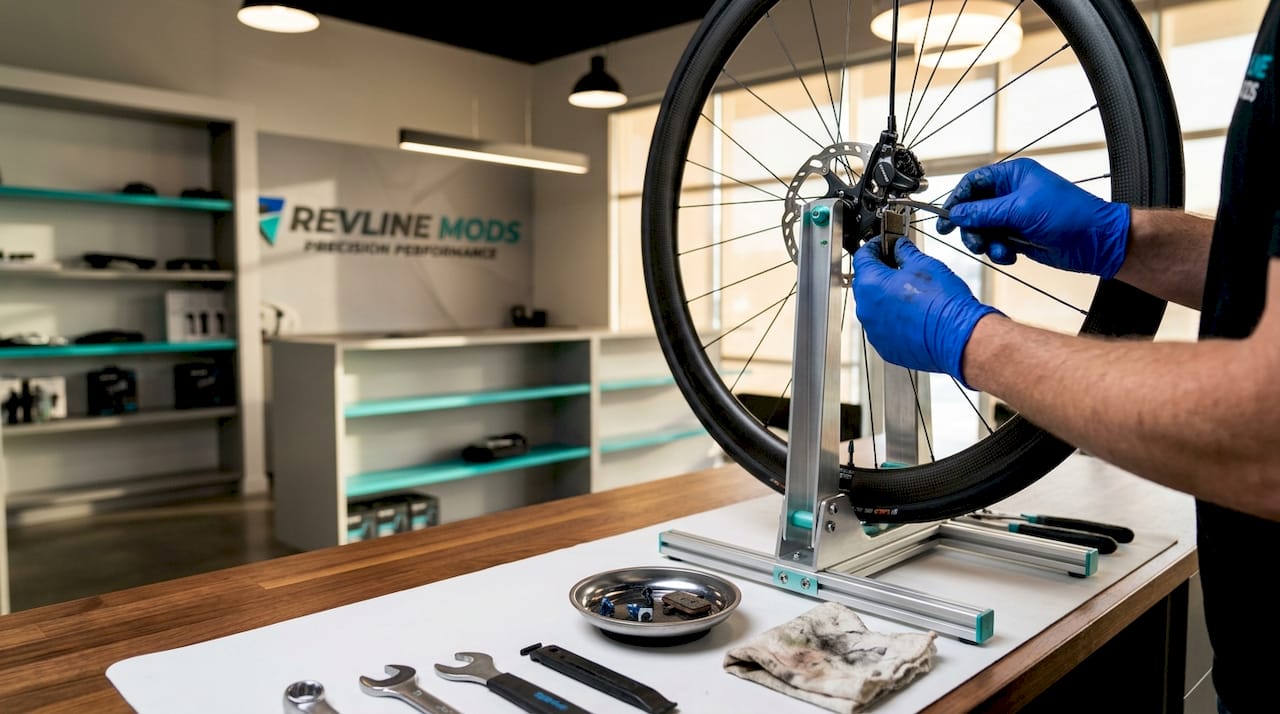
Brake upgrades are the second pillar of safety improvement. Worn brake pads, stretched cables, and low-quality calipers all extend stopping distances in ways that riders often do not notice until an emergency. Replacing brake pads and cables on a mechanical system, or upgrading to hydraulic brakes entirely, restores the stopping confidence that stock components lose over time. For off-road riders on Surron and 79Bike platforms, upgraded brake rotors and pads handle the heat generated during repeated downhill braking far better than OEM parts.
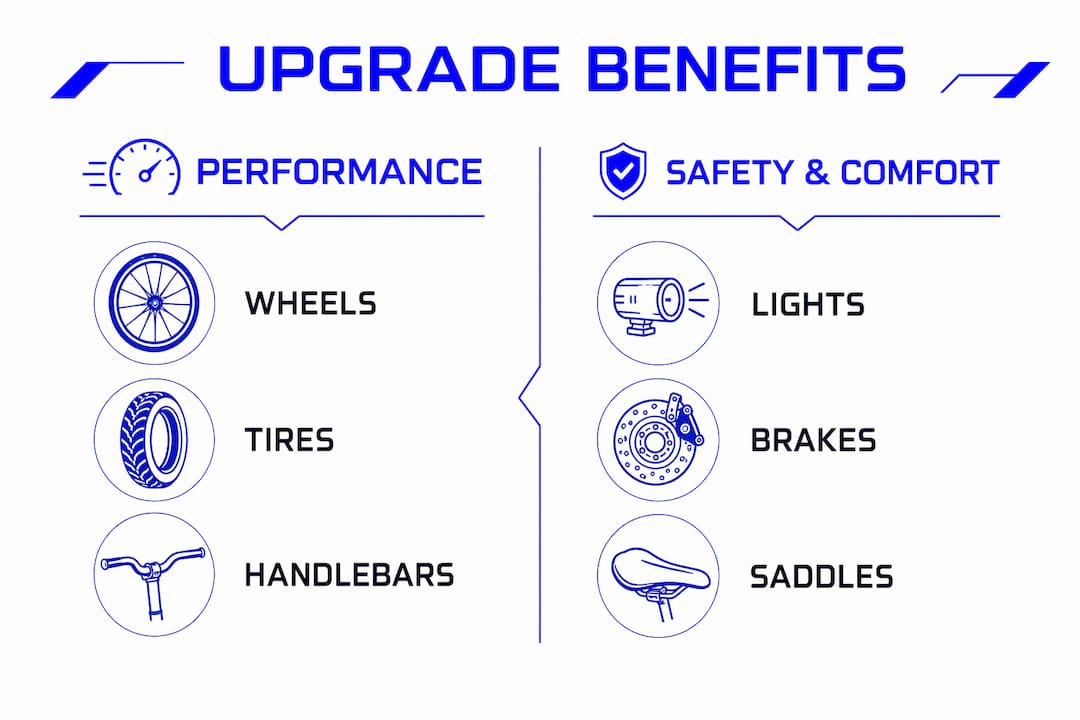
Comfort upgrades protect your body over the long term. Contact point upgrades including grips, saddles, and handlebars often provide greater comfort gains than drivetrain changes. The logic is simple: every force your body absorbs passes through these three points. Ergonomic lock-on grips from brands like Ergon reduce hand fatigue and numbness on long rides. A saddle matched to your sit bone width prevents soft tissue pressure that causes pain after 45 minutes in the saddle.
| Upgrade type | Primary benefit | Approximate cost range |
|---|---|---|
| Daytime running lights | 25% accident risk reduction | $20 to $80 |
| Hydraulic brake upgrade | Consistent stopping in all conditions | $80 to $300 |
| Ergonomic grips | Reduced hand fatigue and numbness | $25 to $60 |
| Saddle replacement | Prevents long-ride soft tissue pain | $40 to $200 |
| Tubeless tire conversion | Fewer flats, better traction | $50 to $150 |
Pro Tip: Short test rides rarely reveal comfort problems. Ride a new saddle or grip setup for at least two weeks of normal riding before deciding whether it works for your body.
What compatibility issues should riders consider before upgrading?
Compatibility is where most upgrade projects go wrong. Modern drivetrains from Shimano, SRAM, and Campagnolo are engineered as matched ecosystems, meaning that mixing components from different groupset tiers or brands frequently causes poor shifting, chain skipping, or accelerated wear. Cable pull ratios, indexing tolerances, and chainline geometry under load must all align for a drivetrain to perform correctly. Swapping a single cassette without matching the derailleur and shifter often produces worse results than the stock setup.
Physical constraints matter just as much as electronic ones. Follow this checklist before committing to any upgrade:
- Measure tire clearance at the fork crown and chainstays before buying wider tires or a new wheelset.
- Check axle standards on your frame and fork. Quick release, thru-axle 12x142mm, and thru-axle 12x148mm Boost are not interchangeable.
- Verify brake mount type. Post mount and flat mount calipers require different adapters and are not universally compatible.
- Confirm drivetrain speed count. An 11-speed chain will not index correctly on a 12-speed cassette.
- Check bottom bracket shell standard before upgrading a crankset. Threaded BSA, press-fit PF30, and T47 shells each require different cups and spindle diameters.
Upgrading parts without a system-level approach leads to frustration and inconsistent performance. For electric motorcycle platforms like Surron and Talaria, this principle applies equally to motor controllers, battery connectors, and display units. A controller upgrade that exceeds the battery management system’s rated output can trigger thermal shutdowns or damage cells. Always verify that the full power delivery chain supports the upgrade you are planning.
How to prioritize upgrades based on cost, impact, and riding goals
The price-to-benefit ratio of bike upgrades varies enormously. Tire pressure optimization costs nothing and can improve rolling resistance and grip more than a $300 wheelset upgrade on the wrong tires. Handlebar tape on a road bike costs $15 and changes how the cockpit feels for thousands of kilometers. These low-cost, high-impact changes should always come before expensive component swaps.
Many high-cost upgrades offer marginal or unmeasurable performance gains. Carbon handlebars save roughly 100 grams over aluminum at three to five times the cost. Oversized derailleur pulleys claim efficiency gains that independent testing rarely confirms. Ceramic bearing upgrades in bottom brackets and hubs produce real but tiny friction reductions that recreational riders will never feel. Spending $400 on ceramic bearings before addressing a worn chain and stretched cables is a common and expensive mistake.
A well-fitted bike prevents overinvestment in compensatory upgrades. Riders who experience back pain often buy new saddles, stems, and handlebars chasing a fix that a professional bike fit would solve in one session. Canyon’s 2026 guidance places fit as the foundational step before any component upgrade. A $150 bike fit appointment frequently eliminates the need for $500 in parts.
Pro Tip: If the total cost of upgrades you are considering exceeds 50% of the bike’s current value, run the numbers on a new bike first. A purpose-built machine at that price point will outperform a heavily modified older frame in most cases.
| Upgrade | Cost | Performance impact |
|---|---|---|
| Tire pressure optimization | Free | High: reduces rolling resistance and improves grip |
| Tubeless conversion | $50 to $150 | High: eliminates pinch flats, improves traction |
| Professional bike fit | $100 to $200 | Very high: prevents injury, improves power transfer |
| Hydraulic brakes | $80 to $300 | High: consistent stopping power in all conditions |
| Carbon handlebars | $150 to $400 | Low: marginal weight savings, no measurable speed gain |
| Ceramic bearings | $200 to $500 | Very low: friction reduction too small to feel |
Key takeaways
Upgrading bike accessories delivers the greatest returns when riders prioritize safety, comfort, and compatibility over prestige components with marginal gains.
| Point | Details |
|---|---|
| Safety upgrades first | Daytime running lights cut multiparty accident risk by 25%, making them the highest-ROI upgrade available. |
| Contact points over drivetrain | Grips, saddles, and handlebars deliver more comfort improvement than most drivetrain swaps at lower cost. |
| Compatibility before purchase | Drivetrain ecosystems, axle standards, and brake mounts must all match before any upgrade will perform correctly. |
| Fit precedes components | A professional bike fit prevents compensatory upgrades and maximizes the value of every part you add. |
| Avoid marginal-gain traps | Carbon handlebars and ceramic bearings cost significantly more than their real-world performance benefit justifies. |
What I’ve learned from years of watching riders upgrade wrong
The most common mistake I see is riders buying the upgrade they want instead of the upgrade they need. Someone rides 20 miles and their hands go numb. Instead of replacing $30 grips, they buy a $400 carbon handlebar because it looks like the fix. The carbon bar saves 80 grams and does nothing for the numbness. The grips would have solved it on the first ride.
Fit is the variable that most riders skip because it does not feel like an upgrade. You cannot photograph a bike fit. You cannot post it on a forum. But professional bike fit is the single change that makes every other upgrade work better. I have watched riders spend $1,200 on a new groupset and still feel uncomfortable because their saddle height was 8mm too low.
For electric motorcycle riders on platforms like Surron and 79Bike, the same principle applies to hardware upgrades. Upgrading your e-bike hardware without understanding your battery’s output limits is the electric equivalent of buying ceramic bearings before fixing a worn chain. Start with what limits your ride today. Fix the brakes. Fix the contact points. Fix the fit. Then add performance.
The riders I respect most are not the ones with the most expensive builds. They are the ones who understand why every part on their bike is there and what it does. That knowledge is what separates a rider who gets faster from a rider who just gets poorer.
— Revline
Upgrade your ride with Revlinemods
Revlinemods stocks the aftermarket components that make a real difference on Surron, Talaria, and 79Bike platforms. Every product in the catalog is selected for compatibility, durability, and genuine performance impact.
The 17" OEM Supermoto Wheelset is one of the highest-impact upgrades available for electric off-road riders, delivering improved handling and acceleration through reduced rotational weight and a stiffer rim profile. For riders who want to protect and personalize their machine, the Surron/79Bike Chrome Motor Cover combines durable protection with a custom look. Revlinemods ships fast, stocks parts built for real riding conditions, and supports riders who want to build smarter, not just spend more.
FAQ
Why upgrade bike accessories instead of buying a new bike?
Targeted accessory upgrades address specific performance or comfort gaps at a fraction of the cost of a new bike. When the frame is sound and the geometry fits, upgrading parts like brakes, tires, and contact points delivers better returns than starting over.
What are the most cost-effective bike upgrades?
Tire pressure optimization, tubeless conversion, and ergonomic grip replacement deliver the highest comfort and performance gains relative to cost. A professional bike fit is the single most impactful investment before any component upgrade.
Do daytime running lights actually make a difference?
A randomized controlled trial with 5,380 cyclists confirmed that daytime running lights reduce multiparty accident risk by 25% overall and by 71% in dark conditions. The safety return per dollar spent exceeds nearly every other upgrade category.
How do I know if my bike parts are compatible?
Check axle standards, brake mount type, drivetrain speed count, and bottom bracket shell standard before purchasing any upgrade. Mixing components from different groupset tiers or brands frequently causes shifting problems and accelerated wear.
When does upgrading stop making sense?
When the total cost of planned upgrades exceeds 50% of the bike’s current market value, a purpose-built replacement often provides better performance and reliability. Extensive upgrades on an aging or ill-fitting frame rarely produce the results riders expect.