


Why Upgrade E-Moto Brakes for Safety and Performance
Upgrading e-moto brakes means replacing stock rotors, brake pads, calipers, or full hydraulic systems with aftermarket components designed to deliver stronger stopping power, better heat management, and more precise modulation. Many electric motorcycle riders discover that OEM brakes are insufficient for the real-world demands of higher speeds, heavier loads, and aggressive terrain. Brands like Formula, Shimano, and Magura have built entire product lines around solving exactly these problems. Whether you ride a Surron, Talaria, or a heavier street-legal e-moto, understanding why upgrade e-moto brakes matters is the first step toward riding with genuine confidence.
Why upgrade e-moto brakes: the core performance and safety case
The single most important reason to upgrade is stopping distance. At speeds above 20 mph, the physics of braking on a heavier electric motorcycle demand more from your brake system than most stock setups can deliver. Better brakes do not just stop you faster. They give you control over how you stop, which is the difference between a clean emergency stop and a locked wheel.
Here is what riders consistently gain from a proper brake upgrade:
- Improved heat dissipation. Rotors act as thermal buffers, absorbing and releasing heat generated during braking. Thicker aftermarket rotors (~2mm versus the stock 1.8mm to 1.85mm) carry more thermal mass, reducing fade on long descents where repeated braking would otherwise cook a thinner rotor.
- Stronger, more consistent bite. Upgraded pads and rotors transfer friction force more reliably across a wider range of temperatures, meaning your brakes feel the same on lap one and lap ten.
- Superior lever feel and reduced hand fatigue. Hydraulic systems deliver stronger braking force with less hand effort, which matters enormously on technical trails or long urban commutes where you are braking repeatedly.
- Shorter stopping distances. Larger rotors, better pads, and hydraulic calipers all contribute to measurably shorter stops, which translates directly to rider safety.
- Better modulation. Modulation is your ability to apply brake force progressively rather than in an on/off snap. Hydraulic systems excel here, giving you the fine control needed in loose dirt, wet pavement, or tight corners.
Pro Tip: If your current brakes feel grabby or inconsistent in cold conditions, the problem is almost always pad compound and rotor surface quality. A pad swap is the cheapest first upgrade before committing to a full hydraulic kit.
How do rotor upgrades compare with full hydraulic system upgrades?
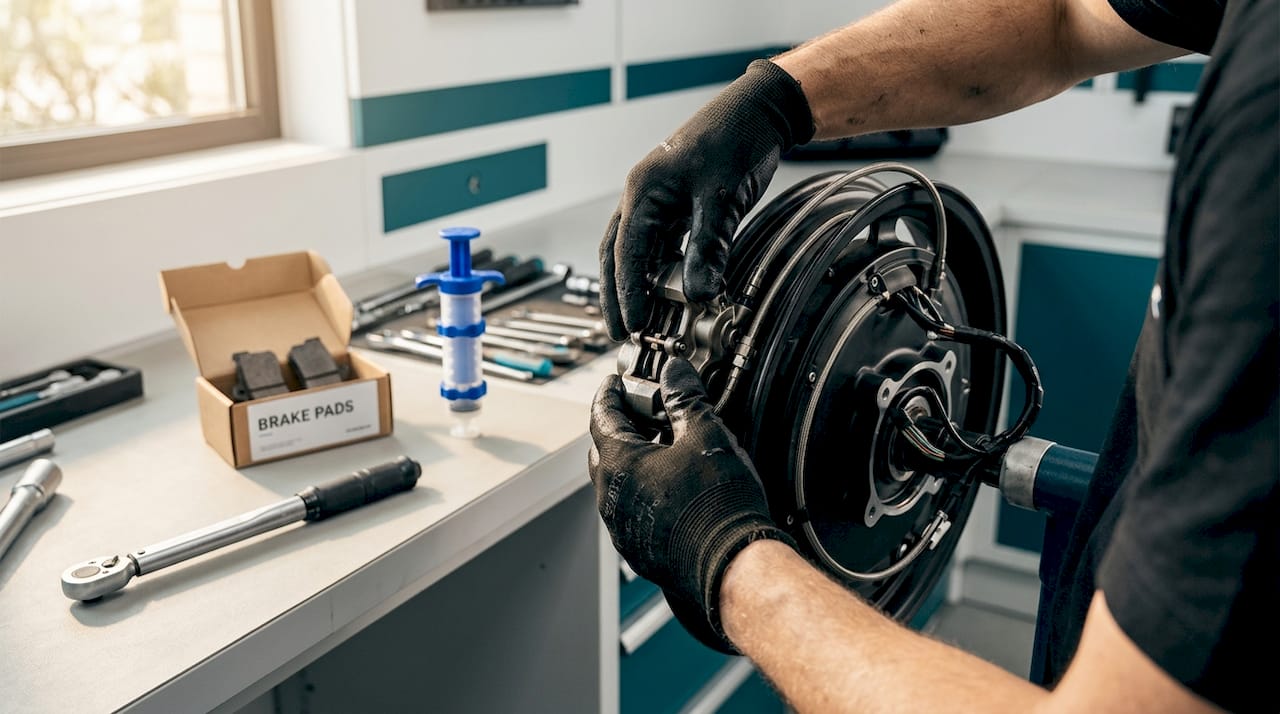
Riders often assume a rotor swap delivers the same results as a full system overhaul. It does not, and understanding the difference saves you money and frustration.
What a rotor upgrade actually does
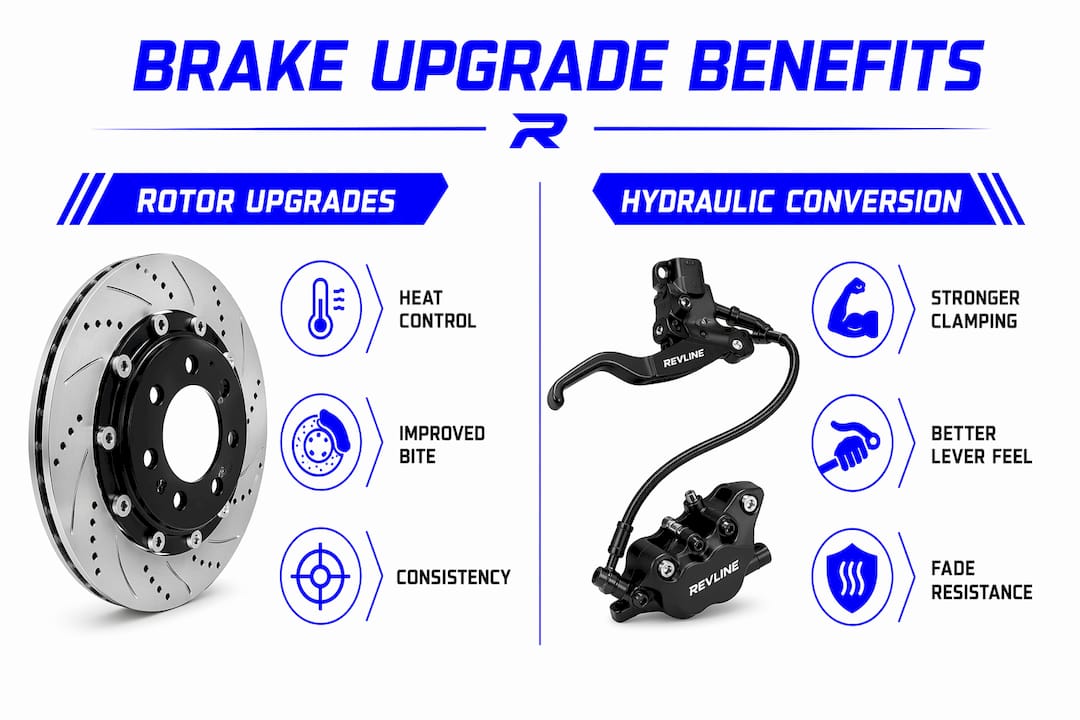
A rotor upgrade improves heat management and provides a slightly snappier bite. Aftermarket rotors improve consistency rather than dramatically increasing raw stopping power. If your stock brakes feel adequate but fade after repeated use, a rotor swap is a targeted, cost-effective fix. Upgrading rotor diameter, say from 180mm to 203mm, provides a more noticeable boost because the larger diameter gives the caliper more leverage. Note that larger rotor sizes typically require a new adapter and a frame compatibility check before installation.
What a full hydraulic conversion delivers
A hydraulic conversion targets the root causes of poor braking: weak clamping force, poor lever feel, and fade resistance under sustained load. Hydraulic kits improve modulation, reduce fade, and offer stronger consistent braking in ways a rotor swap alone cannot match. For riders pushing their e-motos hard on trails or at speed, this is the upgrade that actually changes how the bike feels to ride.
| Upgrade type | Primary benefit | Best for | Complexity |
|---|---|---|---|
| Rotor swap (same diameter) | Better heat management, snappier bite | Casual riders, light fade issues | Low |
| Rotor upgrade (larger diameter) | More stopping leverage, improved heat capacity | Intermediate riders, hilly terrain | Medium |
| Full hydraulic conversion | Superior modulation, fade resistance, lever feel | Aggressive riders, high speed, heavy loads | Medium to high |
| Pad replacement only | Improved friction compound, lower cost | Riders with worn or glazed pads | Very low |
Pro Tip: Many riders overestimate what a rotor swap alone will do. The real transformation comes from pairing a larger rotor with a quality hydraulic caliper. Do both at once if your budget allows.
What riding styles and conditions justify upgrading e-moto brakes?
Not every rider needs the same level of upgrade. The case for improving your braking system gets stronger as your riding gets more demanding. Here is how to self-assess.
Heavier e-motos, higher speeds, and hilly terrain all increase braking demands beyond what stock systems were designed for. A Surron Light Bee weighs around 50 kg. Add a 90 kg rider and cargo, and you are asking your brakes to manage significant kinetic energy on every stop. Stock brakes on these machines are often sized for light recreational use, not repeated hard stops.
The following conditions are clear signals that an upgrade is justified:
- Frequent downhill riding. Repeated braking on descents builds heat faster than most stock rotors can dissipate. Fade, where the brake lever feels progressively softer, is the direct result.
- Riding above 25 mph regularly. Stopping distance increases with the square of speed. A bike traveling at 30 mph needs roughly 2.25 times the stopping distance of the same bike at 20 mph.
- Carrying cargo or a passenger. Added mass means more kinetic energy to shed on every stop. This is one of the clearest justifications for hydraulic upgrades.
- Urban or public trail riding. Cities like Austin, Texas have moved forward with e-moto regulations that reflect growing safety concerns around high-powered electric bikes in shared spaces. Reliable braking is no longer just a performance preference. It is a safety and compliance issue.
- Warning signs from your current brakes. Fading under load, squealing from glazed pads, a spongy lever, or visible rotor wear are all signs your stock system is at its limit.
If two or more of these apply to your riding, the benefits of upgrading e-moto brakes are not theoretical. They are immediate and measurable.
What should you know before upgrading e-moto brakes?
Planning your upgrade correctly prevents wasted money and installation headaches. These are the practical factors every rider needs to check before ordering parts.
- Confirm frame and fork compatibility. Not every e-moto frame accepts larger rotors without modification. Check your fork’s maximum rotor size before ordering a 203mm rotor for a bike spec’d for 180mm.
- Check caliper and adapter requirements. Moving to a larger rotor almost always requires a new caliper adapter to position the caliper correctly over the rotor. Skipping this step causes uneven pad wear and reduced braking efficiency.
- Choose the right pad compound. Sintered pads handle heat better and last longer in wet or muddy conditions. Organic pads offer better initial bite and quieter operation in dry conditions. Match your pad to your primary riding environment.
- Bed in your new brakes properly. Skipping the bedding process is one of the most common mistakes riders make after an upgrade. Bedding transfers a thin layer of pad material onto the rotor surface, which is what creates consistent, high-friction contact. Without it, your new brakes will feel inconsistent and may squeal.
- Plan hydraulic hose routing carefully. On full hydraulic conversions, hose length and routing affect both lever feel and long-term reliability. Too much slack creates a spongy feel. Too little causes binding during steering. Route hoses away from heat sources and sharp edges.
- Bleed the system after installation. Air in a hydraulic line destroys modulation. Bleeding is not optional. Use the fluid specified by your caliper manufacturer, whether that is DOT 4, DOT 5.1, or mineral oil.
Pro Tip: For DIY installs, check out the electric motorcycle mod guide at Revlinemods before you start. Getting the torque specs right on rotor bolts prevents warping under heat.
Key takeaways
Upgrading e-moto brakes delivers the most meaningful safety and performance gains when riders combine larger rotors with hydraulic calipers rather than treating each component as a standalone fix.
| Point | Details |
|---|---|
| Stock brakes have real limits | OEM systems are built for light use and fade under repeated or high-speed braking. |
| Rotor thickness matters | Aftermarket rotors at ~2mm outperform stock 1.8mm rotors in heat management and bite consistency. |
| Hydraulics change the ride | Full hydraulic conversions improve modulation, reduce hand fatigue, and resist fade better than rotor swaps alone. |
| Riding conditions drive the decision | Downhill terrain, cargo loads, and speeds above 25 mph are the clearest justifications for upgrading. |
| Bedding in is non-negotiable | Skipping the bedding process reduces brake efficiency and causes inconsistent feel after any pad or rotor swap. |
The honest truth about brake upgrades most riders learn too late
I have seen riders spend real money on premium rotors and then wonder why their brakes still feel soft. Nine times out of ten, the caliper was the bottleneck the whole time. A beautiful wave rotor bolted to a weak stock caliper is like putting performance tires on a car with worn shocks. The weakest link still controls the outcome.
The other mistake I see constantly is riders upgrading brakes reactively, after a close call or after their pads wear through on a trail. Brake upgrades should be proactive, especially on faster e-motos like the Talaria Sting or Surron Storm Bee, where the power-to-brake ratio already pushes the limits of what stock systems handle comfortably.
My honest recommendation: if you ride anything above 30 mph or spend time on technical terrain, start with a hydraulic caliper and a larger rotor together. Do not half-step it. The performance parts that make the biggest difference are the ones that address the full system, not just one component. And always bed in your pads. Always.
— Revline
Upgrade your stopping power with Revlinemods brake kits
If you have read this far, you already know that stock brakes are a compromise. Revlinemods built the ULTIMATE Ultra Bee Brake Kit specifically for electric motorcycle riders who want a complete, no-guesswork upgrade. The kit addresses heat management, modulation, and stopping consistency in one package, with compatibility across a wide range of popular e-motos.
For riders who want front and rear coverage together, the front and back Ultra Bee brakes deliver a matched system upgrade that eliminates the guesswork of mixing components. Both kits ship fast and come with everything needed for a clean install. If you are ready to stop guessing and start stopping, Revlinemods has the hardware.
FAQ
Why upgrade e-moto brakes instead of just replacing worn pads?
Pad replacement fixes worn friction material but does not address heat management, caliper clamping force, or modulation. A full brake upgrade improves all three, which is what actually changes stopping performance and rider safety.
How much does upgrading electric motorcycle brakes improve stopping distance?
Stopping distance improvements depend on the specific components, but combining a larger rotor with a hydraulic caliper consistently reduces stopping distances compared to stock setups, particularly at speeds above 20 mph where kinetic energy is highest.
Are hydraulic brakes worth the extra cost on an e-moto?
Yes, for any rider dealing with repeated braking, heavier loads, or speeds above 25 mph. Hydraulic systems reduce hand fatigue and provide better modulation than mechanical systems, which directly improves control and safety in demanding conditions.
What is the most common mistake when upgrading e-moto brakes?
Skipping the bedding-in process is the most frequent error. New pads and rotors require a specific break-in procedure to transfer pad material onto the rotor surface. Without it, braking feels inconsistent and the pads wear unevenly from the first ride.
Do I need a new caliper adapter when upgrading to a larger rotor?
Yes, in most cases. Moving from a 180mm to a 203mm rotor requires a new adapter to correctly position the caliper over the rotor surface. Running without the correct adapter causes uneven pad contact and reduces the effectiveness of the entire upgrade.